Morocco is a country of dramatic landscapes, but nothing quite prepares you for the moment when the flat, sunbaked terrain of the southern pre-Sahara suddenly splits open to reveal towering canyon walls rising 300 meters on either side. The Todra and Dades Gorges, carved over millions of years by rivers flowing from the High Atlas Mountains toward the Sahara, are two of the most visually stunning natural formations in North Africa. They sit roughly 50 kilometers apart in the Draa-Tafilalet region and together offer an extraordinary combination of geological spectacle, outdoor adventure, cultural heritage, and scenic driving that rivals anything on the continent.
These gorges are more than scenic stops on the route to the Sahara. They are destinations in their own right, offering world-class rock climbing, memorable hiking trails, traditional Berber villages clinging to canyon walls, and the legendary Road of a Thousand Kasbahs, one of the most photogenic drives in the world. Whether you are a serious outdoor adventurer or a traveler who simply appreciates extraordinary scenery, the Todra and Dades Gorges deserve a prominent place in your Morocco itinerary.
This guide covers everything you need to plan your visit, from trail descriptions and climbing information to practical logistics and how to combine the gorges with a Sahara Desert tour.
Understanding the Geography
How the Gorges Were Formed
Both the Todra and Dades Gorges were created by the erosive power of rivers cutting through the limestone and sandstone layers of the eastern High Atlas Mountains over millions of years. The Todra River and the Dades River flow south from the mountains toward the Sahara, carving progressively deeper channels through the rock as the land slowly uplifted. The result is a pair of narrow, steep-walled canyons that transition from gentle, palm-filled valleys at their mouths to dramatic vertical cliffs at their narrowest points.
Where They Are
Both gorges are located in the province of Tinghir, in the Draa-Tafilalet region of southeastern Morocco.
- Todra Gorge lies approximately 15 kilometers north of the town of Tinghir, accessible via a paved road that follows the Todra River upstream into the mountains.
- Dades Gorge begins about 5 kilometers north of the town of Boumalne Dades, roughly 50 kilometers west of Tinghir along the main N10 highway.
The two gorges are connected by the N10 highway, which runs east-west along the southern edge of the High Atlas, making it easy to visit both in a single itinerary.
Todra Gorge: The Main Attraction
The Canyon
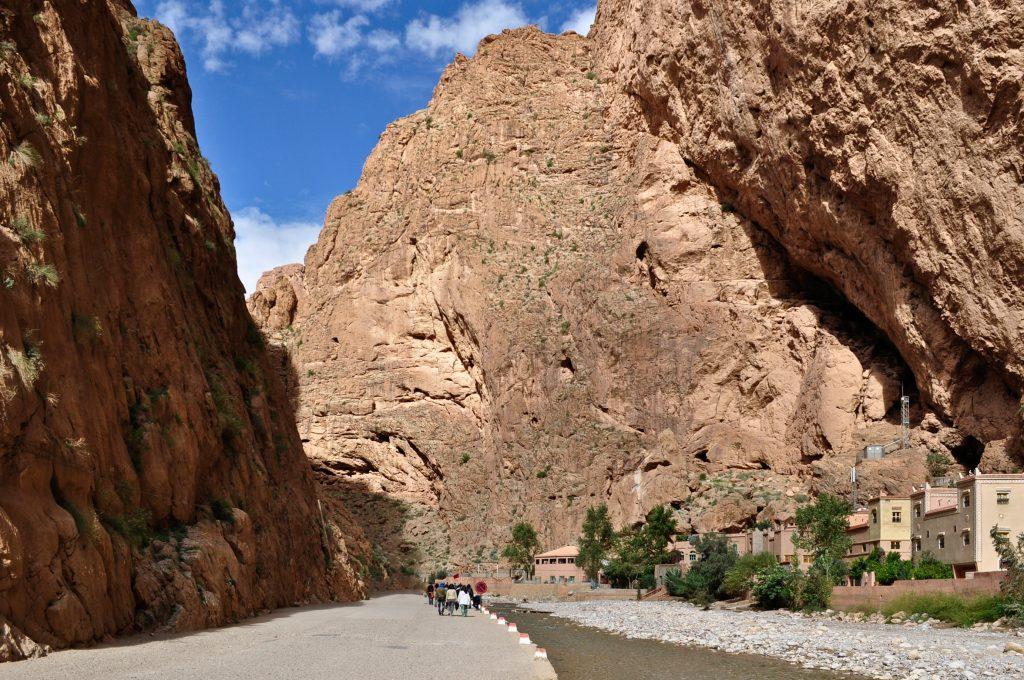
Todra Gorge is the more famous and dramatic of the two, and for good reason. At its narrowest point, the canyon is only 10 meters wide, with smooth limestone walls rising vertically to approximately 300 meters on both sides. The effect is awe-inspiring: a narrow slot of sky visible far above, the sound of the river echoing off the walls, and a sudden drop in temperature as the shade of the canyon replaces the desert sun.
The paved road from Tinghir follows the Todra River through a gradually narrowing valley lined with palm trees, Berber villages, and terraced gardens before reaching the dramatic narrows. The drive itself is beautiful, with red and orange rock formations, traditional kasbahs, and the contrast of green palms against the arid landscape.
Hiking in Todra Gorge
Todra Gorge offers several hiking options ranging from easy walks to challenging multi-day treks.
Easy: The Canyon Walk (1 to 2 hours)
The most popular and accessible option is simply walking through the narrowest section of the gorge. The flat, rocky path along the river bed runs for about 600 meters through the most dramatic part of the canyon. This requires no special equipment or fitness and is suitable for all ages. The path continues beyond the narrows into the upper valley, where you can extend your walk through Berber villages and agricultural terraces.
Moderate: The Gorge Loop Trail (3 to 5 hours)
A circuit trail climbs from the canyon floor up to the rim of the gorge, follows the plateau with panoramic views down into the canyon, and descends back to the starting point. This trail involves some scrambling and moderate elevation gain (approximately 400 meters) and requires sturdy footwear and a reasonable level of fitness. The views from the rim are spectacular and far less crowded than the canyon floor.
Challenging: Upper Todra Valley Trek (Full Day or Multi-Day)
For serious hikers, the Todra River valley extends deep into the High Atlas Mountains beyond the gorge. Multi-day treks can be arranged from Tinghir through traditional Berber villages like Tamtatouchte, Ait Hani, and beyond, eventually crossing mountain passes above 2,500 meters. These treks require a local guide, proper equipment, and advance planning.
Moderate to Challenging: Todra to Dades Traverse (2 to 3 Days)
An ambitious and rewarding option for experienced hikers is the cross-country trek connecting the upper Todra Valley to the upper Dades Valley, crossing a series of mountain ridges and passes. This remote route passes through villages rarely visited by tourists and offers a genuine immersion in Berber mountain culture. A knowledgeable local guide is essential.
Rock Climbing in Todra Gorge
Todra Gorge has become one of the premier rock climbing destinations in Africa and attracts climbers from around the world, particularly during the cooler months.
The Rock
The climbing walls are high-quality limestone, typically featuring vertical to slightly overhanging faces with a variety of holds including pockets, crimps, edges, and occasional tufas. The rock is generally solid, though some routes pass through sections that require care.
Routes and Grades
There are over 150 documented climbing routes in the gorge area, ranging from beginner-friendly 4a to demanding 8a+ (French grading system). The majority of routes are single-pitch sport climbs in the 5 to 7 range, well-bolted and accessible. Multi-pitch routes up to 300 meters are also available for experienced climbers.
The most famous climbing area is the “Pilier du Couchant” (Sunset Pillar), which offers multi-pitch routes on the west-facing wall of the main gorge. Other popular sectors include “Mansour,” “Petite Gorge,” and the walls above the river in the main canyon.
Climbing Season
The best climbing conditions are from October through May, when temperatures in the gorge are comfortable (15 to 25 degrees Celsius during the day). Summer climbing is possible in the early morning and late afternoon, as the gorge walls provide shade for much of the day, but midday temperatures can be prohibitively hot.
Practicalities
Local climbing guides and equipment rental are available in Tinghir. Several guesthouses near the gorge cater specifically to climbers and can arrange guiding, equipment, and route information. If you plan to climb, bring your own harness, shoes, and chalk; while rentals exist, quality and fit can be variable.
Dades Gorge: The Scenic Alternative
The Canyon
Dades Gorge is less vertically dramatic than Todra but arguably more scenic overall, with a wider valley, more varied rock formations, and a paved road that winds through the gorge offering a spectacular drive. The canyon walls display vivid layers of red, orange, pink, and cream-colored sedimentary rock, twisted and folded by geological forces into formations that look almost sculptural.
The most photographed section of the Dades Gorge is the series of tight switchback turns on the road as it climbs from the valley floor up the canyon wall. These hairpin curves, sometimes called the “Monkey Fingers” road (after the unusual rock formations nearby), are a visual spectacle both from below and from above.
The Monkey Fingers
The “Monkey Fingers” (or “Pattes de Singe”) are a set of bizarre rock formations near the entrance to the gorge. Tall, thin columns of conglomerate rock have been eroded into shapes that resemble elongated fingers reaching skyward. They are best viewed from the opposite side of the valley in the morning light and are a popular photography stop.
Hiking in Dades Gorge
Easy: Valley Floor Walk (1 to 3 hours)
A gentle walk along the Dades River through the lower gorge, passing through Berber villages, walnut groves, and almond orchards. The path is flat and easy, with the dramatic canyon walls providing a stunning backdrop. Spring (late March through April) is particularly beautiful when the almond and fruit trees are in bloom.
Moderate: Canyon Rim Trail (3 to 5 hours)
A trail from the village of Ait Oudinar climbs to the rim of the gorge, offering dramatic views down into the valley and across to the surrounding mountains. The trail is well-established but involves steady climbing and some rocky sections.
Moderate: Nomad Canyon (Half Day)
A side canyon accessible from the main gorge road, Nomad Canyon is a narrow slot canyon with a short, atmospheric hike through water-carved rock passages. It is less visited than the main gorge and offers a sense of discovery.
Challenging: High Atlas Passes (Multi-Day)
Like Todra, the upper Dades Valley provides access to the High Atlas for multi-day trekking. The terrain is wilder and less frequented than the Todra side, offering genuine remote mountain trekking through traditional Berber territories.
The Road of a Thousand Kasbahs
The N10 highway that connects the Dades and Todra Gorges is part of the famous “Route des Mille Kasbahs” (Road of a Thousand Kasbahs), one of Morocco’s most celebrated scenic roads. This route runs roughly east-west along the southern edge of the High Atlas, through a landscape dotted with crumbling and restored kasbahs, fortified villages (ksour), palm oasis valleys, and dramatic mountain scenery.
What is a Kasbah?
A kasbah is a traditional Moroccan fortified residence, typically built of pisé (rammed earth and straw) with distinctive crenellated towers and geometric decorative patterns. Kasbahs were the homes of local chieftains and wealthy families, serving as both residences and defensive strongholds. The southern Morocco landscape is densely populated with kasbahs, many in various states of preservation, from meticulously restored to poetically crumbling.
Key Kasbahs Along the Route
- Kasbah of Amridil (Skoura): One of the best-preserved kasbahs in Morocco, still partially inhabited by the original family, and featured on the old 50-dirham banknote.
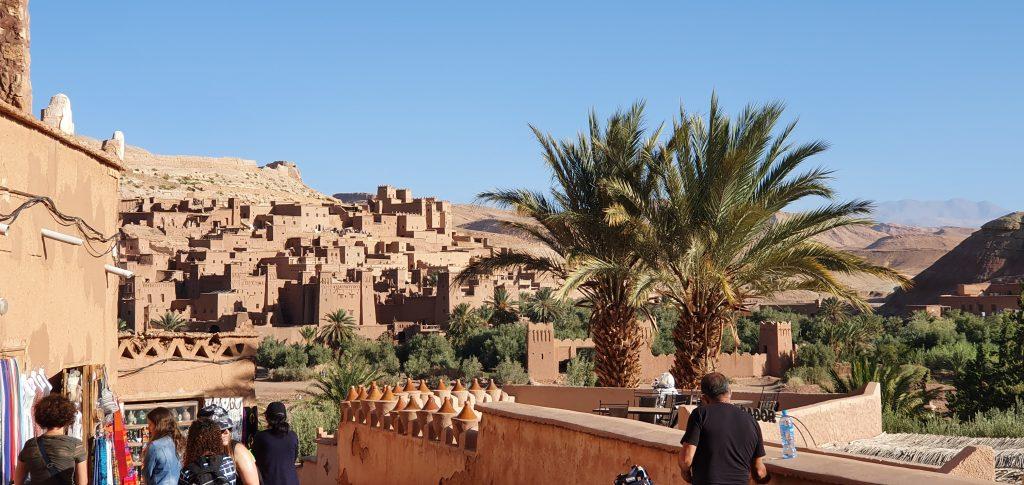
- Kasbah Ait Ben Haddou (further west): A UNESCO World Heritage Site and the most famous kasbah complex in Morocco, used as a filming location for numerous films and television productions.
- Kasbahs of Kelaat M’Gouna: The “Rose Valley” area, famous for its annual rose festival in May and the kasbahs scattered through the surrounding valley.
- Kasbahs of the Dades and Todra Valleys: Both gorge valleys are lined with kasbahs and ksour that blend into the red and orange rock, sometimes almost invisible until you are directly beside them.
Driving the Road of a Thousand Kasbahs between the two gorges is an experience that combines natural scenery with architectural heritage and provides context for the human history of this dramatic landscape.
Best Time to Visit the Gorges
Spring (March to May): The Ideal Season
Spring is widely considered the best time to visit both gorges. Daytime temperatures are comfortable at 20 to 28 degrees Celsius, the rivers are flowing with snowmelt from the High Atlas, and the valley floors are green with new growth. Almond and fruit trees bloom in late March and April, adding splashes of white and pink to the red rock landscape. Hiking and climbing conditions are excellent.
Autumn (September to November): The Second Best
Autumn offers similar temperatures to spring with slightly drier conditions. The light is golden and warm, excellent for photography. The rivers are lower than in spring but still flowing. Climbing season is in full swing from October onward.
Winter (December to February): Cool but Clear
Winter brings cool to cold temperatures (5 to 18 degrees Celsius during the day, below freezing at night at higher elevations). The gorges are quiet and uncrowded, and the clear winter light makes the rock colors particularly vivid. Snow may be visible on the High Atlas peaks above the gorges, adding drama to photographs. Climbing is possible on sunny walls.
Summer (June to August): Hot but Manageable
Summer temperatures can reach 40 degrees Celsius in the lower valleys, but the gorge interiors are significantly cooler due to shade and the river. Morning and late afternoon visits are most comfortable. This is the quietest tourist season, and accommodation prices are lowest.
Practical Information
Getting There
From Marrakech: The drive from Marrakech to the gorges takes approximately 6 to 7 hours via the Tizi n’Tichka pass and Ouarzazate. This is a spectacular drive in itself, crossing the High Atlas at 2,260 meters and passing through the Ait Benhaddou UNESCO site.
From Fez: The route from Fez passes through the Middle Atlas, Midelt, and the Ziz Valley before reaching the gorge region, a journey of 7 to 8 hours. Many travelers combine this with the onward journey to the Sahara.
From Merzouga/Erg Chebbi: The gorges are 2 to 3 hours west of Merzouga, making them a natural stop on the way to or from the Sahara Desert.
Accommodation
Both gorges have a range of accommodation options:
- Budget: Simple guesthouses and auberges within the gorge valleys, often family-run, offering basic but clean rooms and home-cooked Berber meals. Expect to pay 200 to 400 MAD per person including dinner and breakfast.
- Mid-Range: Comfortable hotels and riads in Tinghir, Boumalne Dades, and within the gorge valleys, with private rooms, hot showers, and terraces overlooking the canyon.
- Upscale: A few boutique lodges offer more refined accommodation with pools, spas, and panoramic terrace restaurants.
Guides
For canyon floor walks and short hikes, a guide is not strictly necessary, as the main trails are well-trodden and straightforward. However, for rim trails, multi-day treks, slot canyon exploration, and rock climbing, hiring a local guide significantly enhances both safety and the quality of the experience. Guides can be arranged through your accommodation, through your tour operator, or at the gorge entrance.
Safety Considerations
- Flash floods: Both gorges are subject to flash flooding, particularly in autumn and spring when rain falls in the mountains upstream. The weather in the canyon may be sunny while a storm upstream sends a wall of water through the narrows. Never camp on the canyon floor, heed local warnings, and check weather forecasts for the mountain regions, not just the gorge location.
- Sun exposure: Despite the shade in the narrowest sections, much of the hiking in and around the gorges is exposed. Bring sun protection, water, and a hat.
- Loose rock: Canyon walls shed rock. Avoid lingering beneath overhanging sections, and wear a helmet if climbing.
- River crossings: In spring, the river in Todra Gorge may require wading. Bring waterproof footwear or be prepared for wet feet.
Combining the Gorges with a Sahara Desert Tour
The Todra and Dades Gorges sit directly on the most popular route between Marrakech (or Fez) and the Sahara Desert, making them a natural and rewarding addition to any desert itinerary. Rather than treating them as a brief roadside stop, we recommend dedicating at least one full day, ideally two, to explore the gorges properly.
A Typical Combined Itinerary
A well-paced itinerary combining the gorges and the Sahara might look like this:
Day 1: Depart Marrakech, cross the High Atlas via Tizi n’Tichka, visit Ait Benhaddou, overnight in the Dades Valley or gorge.
Day 2: Explore Dades Gorge in the morning (drive the switchbacks, visit the Monkey Fingers, short hike). Drive to Todra Gorge in the afternoon, walk through the narrows, overnight near Tinghir or in the gorge.
Day 3: Morning in the Todra area (longer hike or free time), then drive east to Merzouga. Afternoon camel trek into the Erg Chebbi dunes, overnight in desert camp.
Day 4: Sunrise in the dunes, return to Merzouga, then onward to your next destination.
This pacing allows you to appreciate the gorges rather than merely driving through them and creates a satisfying narrative journey from mountains through canyons to desert.
Duna Daurada Tours Through the Gorges
Many of our desert tours include stops at the Todra and Dades Gorges as part of the route between Marrakech or Fez and the Sahara. Our local guides know the gorges intimately and can lead you to viewpoints, trails, and hidden corners that independent travelers often miss.
If you want to spend extra time in the gorges for hiking, climbing, or photography, a custom tour allows you to adjust the itinerary to include as much gorge time as you want. Whether you are looking for a challenging multi-pitch climbing day or a gentle walk through a palm oasis, we can build it into your journey.
Browse our available tours to see which itineraries include the gorges, or contact our team to discuss your interests and build the perfect route.
Why the Gorges Matter
The Todra and Dades Gorges are more than scenic attractions. They are windows into the geological history of Morocco, the cultural resilience of the Berber communities who have lived in these valleys for centuries, and the raw power of water and time to shape stone into art. Standing at the base of Todra’s 300-meter walls or winding through the switchbacks of the Dades road, you experience a sense of scale and natural grandeur that photographs, however stunning, cannot fully convey.
For travelers on their way to the Sahara, the gorges provide a dramatic overture. They are the last act of verticality before the landscape opens into the horizontal infinity of the desert. The contrast between the enclosed, echoing canyons and the boundless silence of the dunes is one of the most powerful experiential transitions a Moroccan journey offers. Do not rush through them. Stop, walk, look up, and let the stone tell its story.