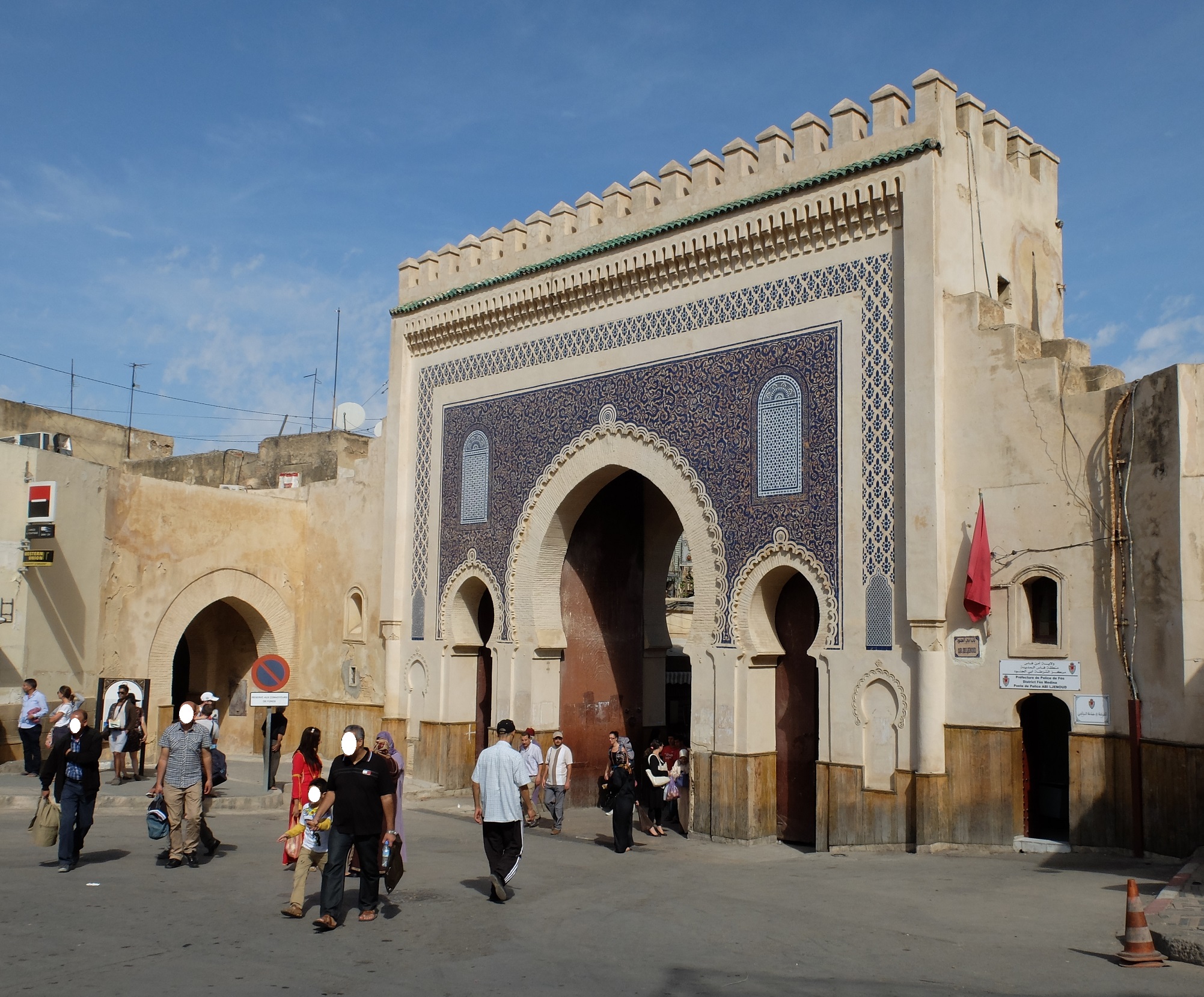
Fez is a city that demands all of your senses at once. The moment you step through one of the ancient gates of the medina, you are immersed in a labyrinth of narrow alleys where the smell of cedar wood, cured leather, and fresh bread mingles with the calls of vendors, the clatter of mule hooves on cobblestone, and the shimmering colors of hand-painted zellige tilework. Founded in 789 AD, Fez is Morocco’s oldest imperial city and home to one of the world’s most intact medieval urban landscapes, a living, functioning city that has barely changed in its fundamental character for over a thousand years.
But Fez is more than a destination in its own right. It is also the ideal gateway to Morocco’s eastern Sahara Desert. Located roughly halfway between the Mediterranean coast and the Erg Chebbi dunes, Fez serves as the natural starting point for some of the most scenic desert routes in the country, passing through the Middle Atlas mountains, cedar forests, the Ziz Valley, and a series of dramatic gorges before arriving at the golden sands of the Sahara.
This guide covers everything you need to know about exploring Fez and using it as the launch point for your desert adventure.
A Brief History of Fez
Fez was founded by Idris I, the founder of Morocco’s first Islamic dynasty, on the banks of the Fez River in the late 8th century. His son, Idris II, expanded the city into a major urban center, attracting scholars, artisans, and refugees from Andalusia (Islamic Spain) and Kairouan (modern Tunisia). These two waves of immigration gave Fez its dual character: the Andalusian Quarter on the east bank and the Kairouanine Quarter on the west bank, each with its own mosque, market, and traditions.
By the 10th century, Fez had become one of the most important cities in the Islamic world. The University of Al Quaraouiyine, founded in 859 AD by Fatima al-Fihri, is recognized by UNESCO and the Guinness Book of World Records as the oldest continuously operating degree-granting university on Earth. At its peak, Fez was a center of learning, trade, and craftsmanship that rivaled Baghdad, Cordoba, and Cairo.
The city served as Morocco’s capital under several dynasties, including the Merinids (13th to 15th centuries), who built the “new” city of Fez el-Jdid adjacent to the ancient medina. The Merinid period saw the construction of many of the madrasas (theological colleges), fondouks (caravanserai), and public buildings that remain among the medina’s architectural highlights today.
Although the political capital eventually moved to Rabat, Fez retained its status as Morocco’s spiritual and cultural capital, a distinction it holds to this day.
Exploring the Fez Medina (Fes el-Bali)
The medina of Fez, known as Fes el-Bali, is the largest car-free urban zone in the world. With an estimated 9,400 narrow alleys, dead ends, and passages, it is genuinely easy to get lost, and getting lost is part of the experience. Approximately 150,000 people live and work within its walls, carrying on trades and traditions that have persisted for centuries.
Navigating the Medina
The two main arteries of the medina are Talaa Kebira (the Large Slope) and Talaa Seghira (the Small Slope), both running downhill from the Bab Bou Jeloud gate toward the heart of the old city. These streets are lined with shops, restaurants, and workshops and serve as the primary orientation landmarks. If you can find your way back to one of these two streets, you can find your way out.
That said, hiring a local guide for at least your first exploration of the medina is highly recommended. The layout is deliberately complex, designed over centuries to slow invaders and create private residential neighborhoods. A knowledgeable guide will navigate efficiently and provide historical and cultural context that transforms a walk through the alleys into a journey through a thousand years of history.
Key Sights Within the Medina
Al Quaraouiyine University and Mosque: The spiritual heart of Fez, this complex has been a center of Islamic scholarship since the 9th century. While the mosque interior is closed to non-Muslims, the recently restored library (Khizanat al-Qarawiyyin) occasionally opens for guided visits, and the surrounding courtyards and architectural details are visible from the entrances.
Bou Inania Madrasa: Built by the Merinid sultan Abu Inan Faris in the 1350s, this is the only madrasa in Fez open to non-Muslim visitors and is considered one of the finest examples of Marinid architecture in existence. The intricate carved stucco, zellige tilework, and cedar wood carvings are extraordinary.
Chouara Tanneries: The most famous (and most pungent) sight in Fez, the Chouara tanneries have operated continuously since at least the 11th century. Workers stand in stone vats filled with natural dyes and solutions, processing leather using methods that have barely changed in a millennium. The best views are from the surrounding terraces of leather shops, where you can look down on the colorful array of vats. Visit in the morning when the light is best and the tanneries are in full operation.
Nejjarine Museum of Wooden Arts and Crafts: Housed in a beautifully restored 18th-century fondouk, this museum showcases traditional Moroccan woodworking and offers a peaceful rooftop terrace with views over the medina.
Dar Batha Museum: Located in a 19th-century palace, this museum displays a collection of traditional Fassi arts, including ceramics, embroidery, carved wood, and Berber jewelry.
Mellah (Jewish Quarter): Fez’s historic Jewish quarter, established in the 15th century, features distinctive architecture with wooden balconies overlooking the streets, a contrast to the inward-facing design of the Muslim quarters. The Ibn Danan Synagogue, recently restored, is open to visitors.
The Artisan Workshops of Fez
Fez has been designated a UNESCO World Heritage Site in large part because of its living artisan traditions. The medina is home to thousands of workshops where craftspeople practice skills passed down through family lines for generations.
Zellige Tilework
The geometric mosaic tilework that adorns mosques, madrasas, and fountains throughout Morocco originates in Fez. In workshops around the medina, you can watch artisans chip individual tiles by hand from glazed ceramic squares, assembling them face-down into intricate geometric patterns guided by nothing but memory and experience.
Metalwork and Brass
The Place Seffarine, a small square near the Al Quaraouiyine Mosque, is the center of Fez’s metalworking tradition. Coppersmiths and brass workers hammer, engrave, and inlay trays, lanterns, teapots, and decorative objects using techniques that date back centuries. The rhythmic hammering echoing off the surrounding walls is one of the most distinctive sounds of the medina.
Leather and Textiles
Beyond the tanneries, Fez is renowned for its leather goods, from babouche slippers to bags and book covers, and for traditional textile weaving. Looms in workshops throughout the medina produce silk and wool fabrics for caftans, scarves, and ceremonial garments.
Pottery and Ceramics
The Fez pottery district, located just outside the medina walls in the Ain Nokbi area, is home to large cooperative workshops where you can observe the entire process from clay shaping to painting to kiln firing. The distinctive Fez blue pottery, with its cobalt blue geometric designs on white backgrounds, is immediately recognizable and makes a memorable souvenir.
Fez Beyond the Medina
While the medina is the primary attraction, Fez offers several worthwhile experiences beyond its walls.
Fez el-Jdid
The “new” city, built in the 13th century (relatively new by Fez standards), contains the Royal Palace (Dar el-Makhzen) with its spectacular golden doors, the Mellah, and the Moulay Abdellah Quarter. The Royal Palace gates are a popular photography spot, though the palace itself is not open to the public.
Merinid Tombs
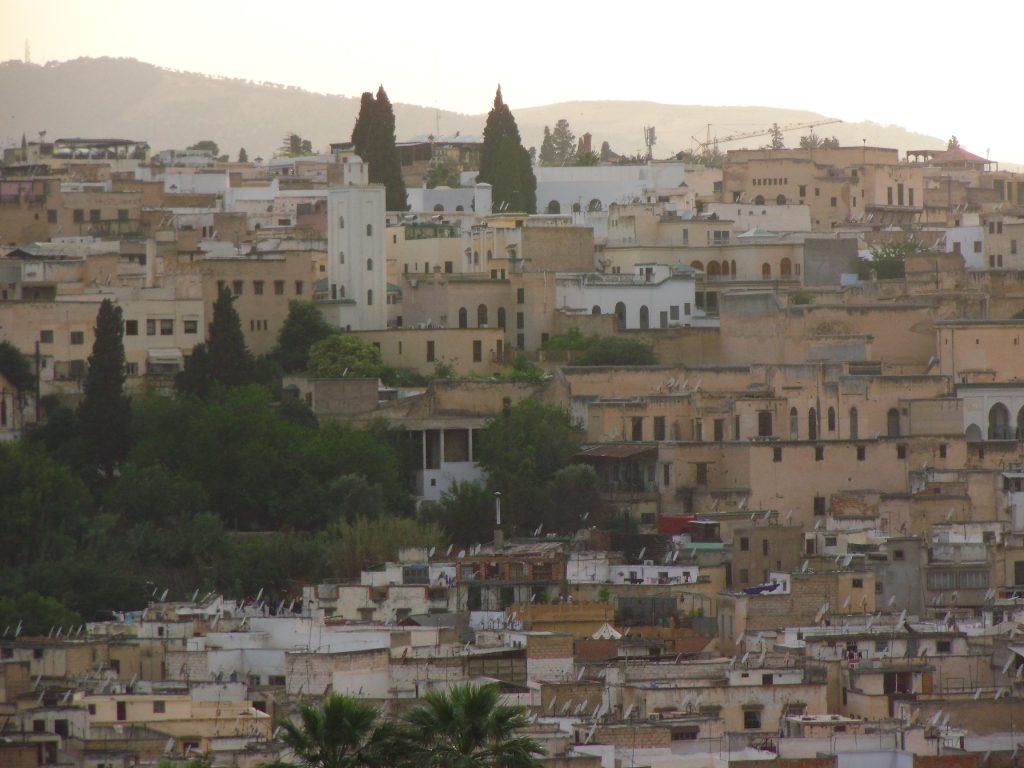
The ruins of the Merinid dynasty tombs sit on a hillside north of the medina, offering a panoramic view of the entire old city, particularly stunning at sunset when the minaret-studded skyline turns golden. This is the classic viewpoint for photographing Fez.
Borj Nord and Borj Sud
Two historic fortresses flanking the medina, Borj Nord houses a weapons museum while Borj Sud offers excellent viewpoints. Both are accessible by road or a moderately steep walk from the medina edges.
Ville Nouvelle
The French colonial new town, built during the Protectorate era (1912 to 1956), features wide boulevards, Art Deco architecture, cafes, and modern shops. It provides a contrast to the medieval medina and is where most banks, pharmacies, and international restaurants are located.
Where to Eat in Fez
Fassi cuisine is considered among the finest in Morocco, distinct from Marrakech’s simpler fare. The city’s culinary traditions reflect centuries of Andalusian, Arab, and Berber influence.
Signature Fassi Dishes
- Pastilla (Bastilla): A sweet and savory pie traditionally filled with pigeon (now often chicken), almonds, eggs, and spices, wrapped in crispy warqa pastry and dusted with powdered sugar and cinnamon. Fez is the undisputed home of this dish.
- Fassi-style Tagine: Fez tagines tend to be more refined and layered than their southern counterparts, often featuring prunes, apricots, honey, and saffron alongside lamb or chicken.
- Rfissa: A celebratory dish of shredded msemen (layered flatbread) with lentils and chicken in a spiced fenugreek broth.
- Harira: A hearty tomato and lentil soup, eaten especially during Ramadan but available year-round.
Where to Eat
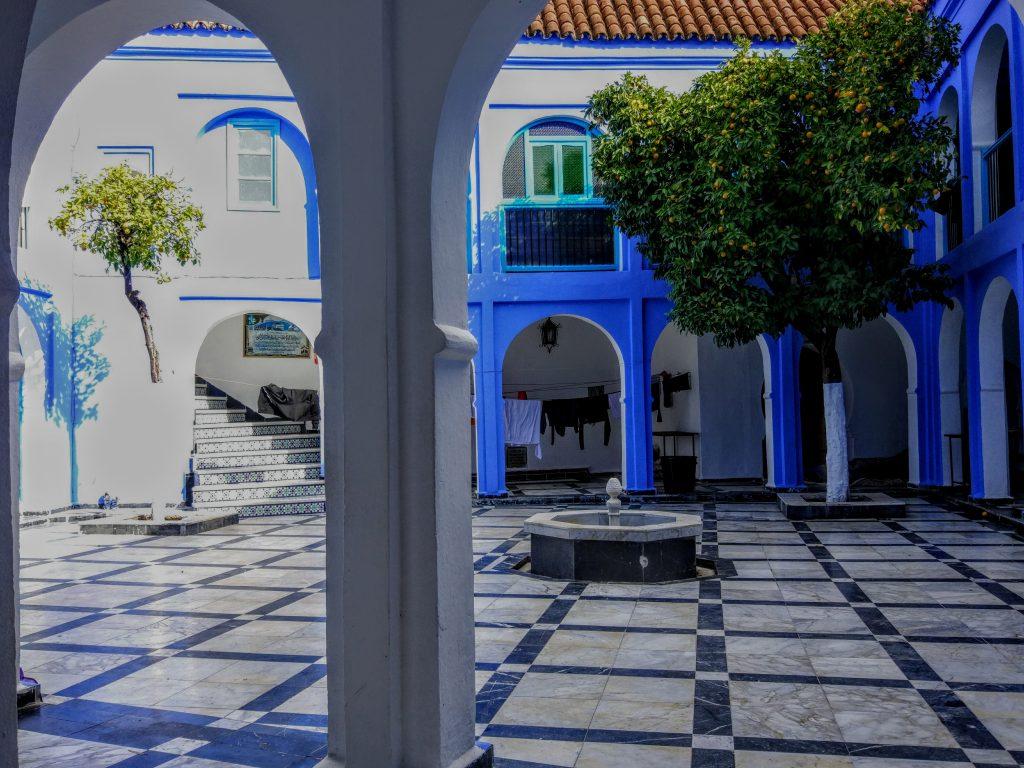
Both traditional riad restaurants within the medina and more modern establishments in the Ville Nouvelle offer excellent meals. For an immersive experience, seek out restaurants in converted riads where you eat in a central courtyard surrounded by zellige tilework and the sound of a fountain.
Fez as a Gateway to the Sahara
Fez is the most popular starting point for desert tours heading to Morocco’s eastern Sahara, specifically the Erg Chebbi dunes near Merzouga. The journey from Fez to the desert is itself one of the most scenic road trips in North Africa, passing through dramatically varied landscapes.
The Classic Fez-to-Sahara Route
The standard route from Fez to Merzouga covers approximately 460 kilometers and is typically done over two days with stops along the way, though it can be driven in a single long day if necessary.
Day 1: Fez to the Middle Atlas and Ziz Valley
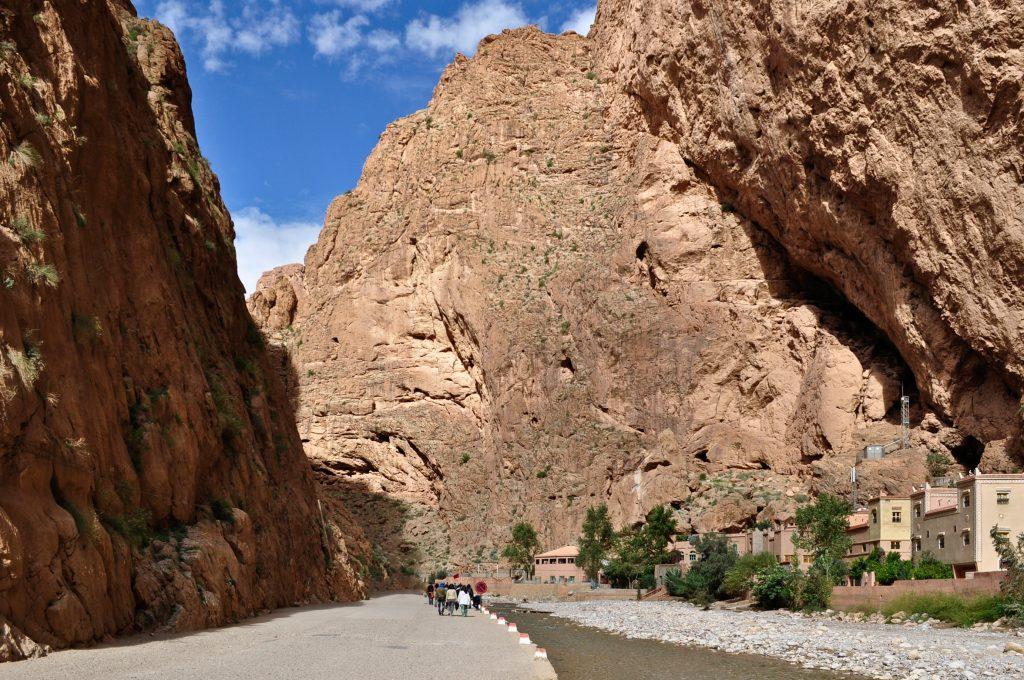
The road south from Fez climbs into the Middle Atlas Mountains, passing through Ifrane (known as “Morocco’s Switzerland” for its alpine architecture and cool climate) and the cedar forests of Azrou, where Barbary macaques live in the wild. The route continues through Midelt and descends into the Ziz Valley, a stunning palm-lined river gorge that seems to appear from nowhere in the arid landscape.
Day 2: Ziz Valley to Erfoud and Merzouga
From the Ziz Valley, the route continues south through Errachidia and Erfoud, a small town known for its fossil trade, before arriving at Merzouga and the edge of the Erg Chebbi dunes. The transition from mountain terrain to flat hammada (rocky desert) to towering sand dunes is one of the most dramatic landscape shifts you can experience in a single day.
The Northern Route via Taza
An alternative route passes through Taza, an often-overlooked city with an impressive medina and nearby national park, before joining the main road south through the Moulouya Valley. This route is less traveled and offers a different perspective on Morocco’s geographic diversity.
Combining Fez with a Desert Tour
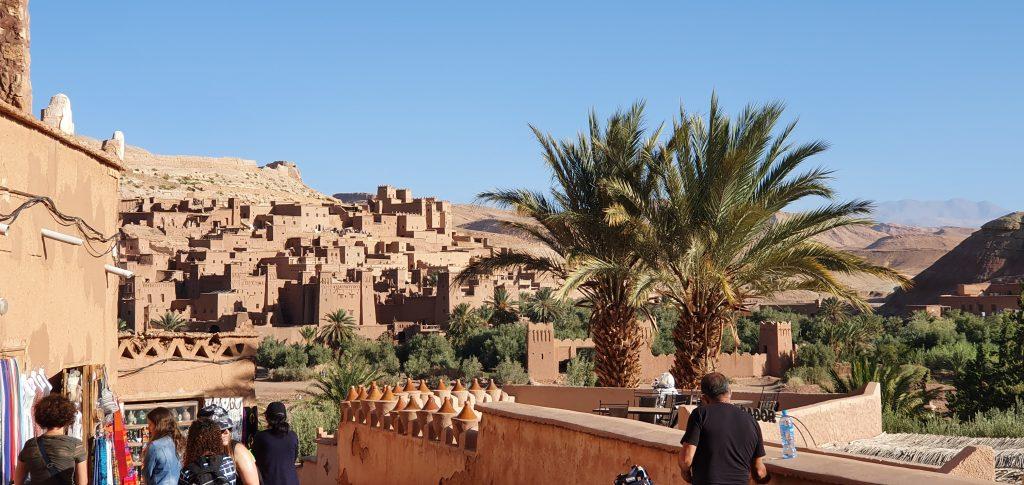
The most rewarding way to experience both Fez and the Sahara is to combine them into a single itinerary. Many travelers spend two to three days exploring Fez before departing on a multi-day desert tour that follows the scenic route south, includes stops at gorges, kasbahs, and oasis valleys, and culminates with camel trekking and overnight camping in the Erg Chebbi dunes.
Duna Daurada offers several tours departing from or passing through Fez, ranging from three-day express trips to longer, more leisurely itineraries that include the Todra and Dades Gorges, the Rose Valley, and Ait Benhaddou. If you want to tailor the route to your interests and schedule, a custom tour allows full flexibility.
Practical Tips for Visiting Fez
Getting There
Fez has an international airport (Fes-Saiss, FEZ) with direct flights from several European cities, including budget carriers. The city is also well connected by train to Casablanca, Rabat, Marrakech, and Tangier, and by bus to virtually every major Moroccan city.
How Long to Spend
Two full days is the minimum to appreciate the medina and key sights. Three days allows for a more relaxed pace, including visits to the pottery workshops, the Merinid Tombs at sunset, and a cooking class. If Fez is the starting point for your desert tour, plan to arrive at least one day before your tour departure to recover from travel and begin exploring.
Accommodation
Staying in a traditional riad within the medina is the quintessential Fez experience. These converted family homes are built around a central courtyard and often feature rooftop terraces with views over the medina. Riads range from budget-friendly guesthouses to luxurious five-star properties with private plunge pools and gourmet restaurants.
Guides and Getting Around
Within the medina, everything is on foot. For your first visit, hiring an official local guide (available through your riad or the tourist office) is strongly recommended. Expect to pay around 300 to 400 MAD for a half-day guided tour of the medina highlights.
For travel beyond the medina, petit taxis (small red taxis) are inexpensive and readily available. For the journey to the Sahara, a private vehicle with a driver or an organized tour is the most practical option.
Shopping Tips
The souks of Fez are among the best in Morocco for quality craftsmanship. Look for leather goods, zellige tiles, brass lanterns, Fez blue pottery, and traditional textiles. Bargaining is expected and part of the culture; start at roughly half the asking price and negotiate with good humor. Quality varies enormously, so take your time and visit multiple shops before committing to a purchase.
Cultural Etiquette
Fez is a conservative city, particularly within the medina. Dress modestly (covering shoulders and knees), ask permission before photographing people, and be respectful around mosques and religious sites. During Ramadan (dates shift annually), be mindful of eating, drinking, and smoking in public during daylight hours.
Conclusion
Fez is one of those rare cities that can genuinely claim to transport you to another era. Walking through its medina is not a museum experience; it is an encounter with a living, breathing medieval city where the same crafts are practiced in the same workshops, the same prayers are called from the same minarets, and the same recipes are prepared in the same kitchens as they have been for centuries.
As the gateway to the eastern Sahara, Fez also offers the perfect narrative arc for a Moroccan journey: begin in the dense, complex, intensely human environment of the medina, then gradually transition through mountains, valleys, and gorges until the landscape opens into the vast, silent emptiness of the desert. The contrast between the two experiences, the crowded alley and the empty dune, makes each more powerful.
Whether you are drawn by the history, the craftsmanship, the cuisine, or the simple magic of getting lost in a thousand-year-old labyrinth, Fez deserves a place in every Morocco itinerary. And when you are ready to trade the medina walls for the open sky of the Sahara, explore our tours to find the perfect route from Fez to the dunes, or contact us to design a journey that is entirely your own.