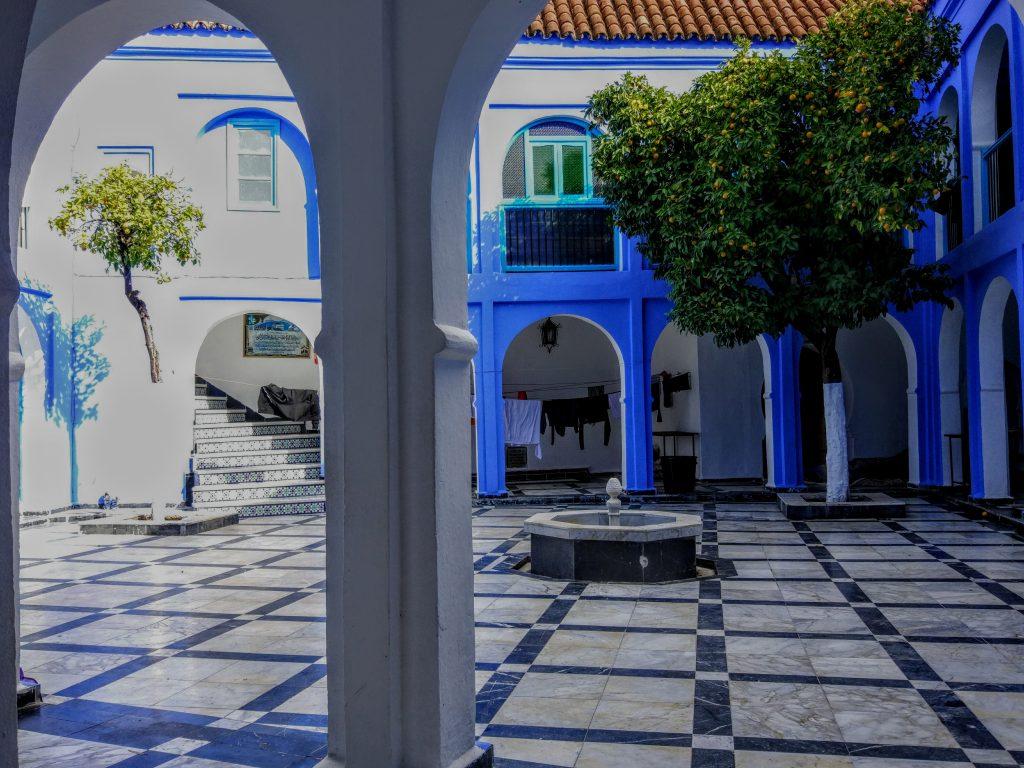
Tucked into the folds of the Rif Mountains in northern Morocco, Chefchaouen is one of those rare places that looks exactly as extraordinary in person as it does in photographs. Every wall, doorway, staircase, and alleyway is painted in shades of blue, from soft powder to deep cobalt, creating a visual experience unlike anywhere else in the world. It is a town that seems designed for wandering, and it pairs beautifully with a Sahara desert adventure as either a beginning or a grand finale to your Moroccan journey.
This guide covers everything you need to know about visiting Chefchaouen, including the history behind the blue, the best things to see and do, hiking opportunities in the surrounding mountains, practical travel tips, and how to seamlessly connect a Chefchaouen visit with a Sahara desert tour.
The History Behind the Blue
Chefchaouen was founded in 1471 by Moulay Ali ibn Rachid as a fortress to fight Portuguese invasions in northern Morocco. For centuries, it remained a largely isolated and forbidden city. Non-Muslims were not permitted to enter until the Spanish occupation in 1920, and when they did, they found a community that had been living quietly in the mountains for hundreds of years.
The blue paint that defines the town today has several origin stories. The most widely accepted explanation ties it to the Jewish refugees who settled in Chefchaouen after fleeing Spain during the Inquisition in the 15th century. In Jewish tradition, blue represents the sky and heaven, and painting homes blue was a reminder of God’s presence. The tradition was adopted by the broader community and has been maintained and expanded ever since, partly for its cultural significance and partly because the blue paint is believed to repel mosquitoes and keep buildings cool.
Whatever the reason, the result is magical. Walking through the medina feels like moving through a living painting, where the interplay of blue walls, green potted plants, and golden sunlight creates an atmosphere of extraordinary calm.
Best Things to Do in Chefchaouen
Wander the Medina
The medina is the heart of Chefchaouen and the reason most visitors come. Unlike the medinas of Marrakech or Fez, Chefchaouen’s old town is small enough to explore without getting hopelessly lost and quiet enough to enjoy without feeling overwhelmed. Narrow lanes climb and descend the hillside, opening into small squares where locals sit and chat over glasses of mint tea.
There is no specific route to follow. The beauty of the medina is in its surprises: a particularly striking doorway, a cat dozing on a blue step, a shaft of light illuminating a carved window frame. Let yourself wander and be rewarded.
Visit the Kasbah and Plaza Uta el-Hammam
The central square of Chefchaouen, Plaza Uta el-Hammam, is anchored by the 15th-century Kasbah, a walled fortress with a lovely Andalusian garden inside. The Kasbah houses a small ethnographic museum and a restored dungeon. Climbing the tower offers one of the best panoramic views of the medina and the mountains beyond.
The plaza itself is lined with cafes and restaurants where you can sit, watch the world go by, and enjoy a tagine or a plate of pastilla. It is the natural gathering place of the town and a wonderful spot for people-watching.
Explore the Grand Mosque
Adjacent to the plaza stands the Grand Mosque of Chefchaouen, notable for its unusual octagonal minaret, a rare architectural feature in Morocco. Non-Muslims cannot enter the mosque, but the exterior and minaret are worth admiring, especially when lit by the soft light of early morning.
Discover the Ras el-Maa Waterfall
Follow the medina lanes uphill toward the eastern edge of town, and you reach Ras el-Maa, a small waterfall fed by mountain springs. It is not a dramatic cascade, but it holds genuine charm. Local women come here to do laundry, children play in the shallow pools, and the surrounding area offers lovely views of the red-roofed buildings against the green mountainside. It is also the starting point for several hiking trails into the Rif.
Shop for Local Crafts
Chefchaouen is known for its handwoven blankets, leather goods, and goat cheese. The artisan shops here are less aggressive than those in larger Moroccan cities, and prices are generally more reasonable. Woven wool blankets in traditional Rif Mountain patterns make particularly beautiful and portable souvenirs.
The town is also famous for its round goat cheese, produced by local farmers and sold in the markets. Ask for jben, the fresh variety, which is tangy and delicious spread on bread.
Best Photo Spots in Chefchaouen
Chefchaouen is one of the most photogenic towns on Earth, and nearly every corner offers a picture-worthy scene. However, a few locations stand out.
The Blue Stairs
Scattered throughout the medina are staircases painted in vivid blue, often decorated with potted plants. The most photographed set is near the junction of Rue Targhi and Rue Kharrazin, where a series of steps climbs between blue walls adorned with colorful planters. Arrive early in the morning for the best light and the fewest other photographers.
The Spanish Mosque Viewpoint
For the definitive panoramic view of Chefchaouen, hike up to the old Spanish Mosque on the hill overlooking the town. The walk takes about 20 to 30 minutes from the medina and follows a clear path. The view from here, especially at sunset, is breathtaking: the entire blue medina spread below you, framed by the jagged peaks of the Rif Mountains. This is the photograph you see on magazine covers and Instagram feeds.
Doorways and Details
Beyond the grand views, Chefchaouen’s beauty lies in its details. Carved wooden doors painted in contrasting shades of blue, ornate iron knockers, hand-painted tiles, and arched passageways all reward close attention. A macro or detail-focused approach to photography works beautifully here.
The Tanneries
On the outskirts of the medina, small-scale leather tanneries operate using traditional methods. While less famous than the tanneries of Fez, they offer a more intimate and less touristic glimpse into traditional leatherworking. The dye pits, filled with natural colors, create striking visual compositions.
Hiking in the Rif Mountains
Chefchaouen is a gateway to outstanding hiking in the Rif Mountains, a range that stretches across northern Morocco with peaks exceeding 2,000 meters. The mountains around Chefchaouen are covered in cedar and pine forests, terraced farmland, and wildflower meadows, a sharp contrast to the arid landscapes of the south.
Jebel el-Kelaa
The twin-peaked mountain that towers directly above Chefchaouen offers a challenging but rewarding day hike. The trail begins near Ras el-Maa and climbs steeply through forest and scrubland to the summit at around 1,616 meters. From the top, you can see across the Rif range and, on clear days, all the way to the Mediterranean coast. Allow five to six hours for the round trip.
The God’s Bridge (Pont de Dieu)
A natural rock arch spanning a gorge, God’s Bridge is one of the most spectacular natural features near Chefchaouen. The hike from town takes roughly two hours each way and follows a well-marked trail through forests and along a river valley. The arch itself is massive and offers a dramatic setting for photographs.
Talassemtane National Park
This protected area southeast of Chefchaouen shelters one of the last remaining stands of Moroccan fir (Abies marocana), an endangered species found nowhere else on Earth. The park offers several marked hiking trails ranging from easy half-day walks to multi-day treks. Birdwatchers will appreciate the park’s population of raptors, including golden eagles and Bonelli’s eagles.
Akchour Waterfalls
Located about 30 kilometers from Chefchaouen within Talassemtane National Park, the Akchour waterfalls are a popular day trip. The trail follows a river gorge to a series of cascades and natural swimming pools. The main waterfall drops roughly 20 meters into a turquoise pool. The hike is moderate in difficulty and takes about two hours each way. In summer, the pools are popular swimming spots.
Where to Stay in Chefchaouen
Chefchaouen offers accommodation ranging from budget hostels to beautifully restored riads.
Riads in the Medina
The most atmospheric option is a riad, a traditional Moroccan house built around a central courtyard, converted into a guesthouse. Medina riads place you in the heart of the blue city, often with rooftop terraces offering stunning views. Rooms are typically decorated with local textiles and tilework. Prices are moderate by international standards, and the hospitality is generally warm and personal.
Hotels Outside the Medina
If you prefer more space, parking, or modern amenities, several hotels are located just outside the medina walls. These tend to offer larger rooms and easier access for vehicles, which is useful if you are arriving by car.
Budget Accommodation
Backpackers will find several hostels and budget guesthouses in and around the medina, with dormitory beds available at very reasonable prices. Even on a tight budget, you can find a clean room with a view in Chefchaouen.
Local Cuisine and Where to Eat
Chefchaouen’s food reflects its mountain setting and Rif cultural heritage. Dishes tend to be hearty and flavored with local herbs.
Must-Try Dishes
Chefchaouen is famous for its goat cheese, which appears in salads, sandwiches, and on its own with bread and olive oil. The town’s tagines often feature seasonal vegetables from the surrounding farmland, and the local take on bissara (a broad bean soup) is wonderfully comforting, especially after a morning hike.
Freshly squeezed juices are available everywhere, with orange and avocado being the most popular choices. The mint tea here is as good as anywhere in Morocco.
Recommended Dining Experiences
Many restaurants in the medina offer rooftop seating with views of the blue walls and mountains. Eating on a rooftop terrace as the evening call to prayer echoes across the valley is one of those experiences that encapsulates the magic of Morocco.
The small restaurants around Plaza Uta el-Hammam serve reliable Moroccan cuisine at fair prices. For a more local experience, seek out the smaller family-run eateries on the quieter lanes away from the main square, where the food is often more authentic and the prices lower.
Combining Chefchaouen with a Sahara Desert Tour
One of the most common questions travelers ask is whether they can visit both Chefchaouen and the Sahara on the same trip. The answer is absolutely yes, and doing so gives you the opportunity to experience Morocco’s remarkable geographic diversity, from green mountains and blue cities in the north to golden dunes and starlit deserts in the south.
Chefchaouen Before the Desert
Starting your trip with Chefchaouen works well if you are arriving in Morocco through Tangier (which has both ferry connections from Spain and an international airport) or Fez. Spend two or three days exploring the blue city and hiking in the Rif, then travel south to Fez or directly to the desert via the middle Atlas route.
This itinerary has a natural narrative arc: you begin in the cool, lush mountains and gradually transition through the arid landscapes of the south until you reach the dramatic sand seas of the Sahara.
Chefchaouen After the Desert
Alternatively, many travelers visit the Sahara first and then unwind in Chefchaouen. After the intensity and vastness of the desert, the intimate lanes and shaded terraces of the blue city feel like a gentle exhale. This works particularly well if your departure point is Tangier or if you want to end your trip on a relaxed note.
Getting from Chefchaouen to the Sahara
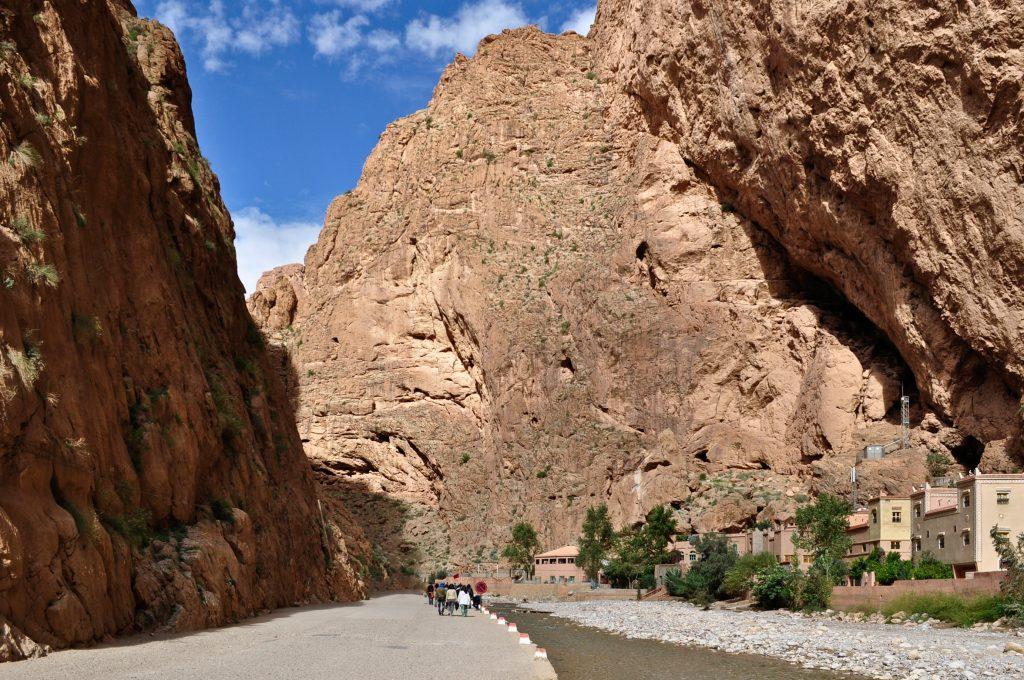
The distance between Chefchaouen and the Erg Chebbi dunes near Merzouga is roughly 600 kilometers. There is no direct public transport, but several options exist. You can travel via Fez (around 4 hours by bus or shared taxi from Chefchaouen), where you connect with a desert tour departing southward. Alternatively, you can build a custom itinerary that includes both destinations with private transport, turning the journey itself into part of the adventure with stops at the Middle Atlas cedar forests, Ifrane, the Ziz Gorges, and other highlights along the way.
Suggested Combined Itineraries
A comfortable itinerary combining both destinations typically runs 8 to 12 days. A sample plan might include two days in Chefchaouen, one day traveling to Fez, one day in Fez, two days driving to the desert with stops along the way, two days in the Sahara, and then a return journey. You can explore our available tours and filter by duration and style to find an itinerary that fits your schedule.
Practical Travel Tips for Chefchaouen
Getting There
Chefchaouen does not have an airport. The nearest airports are Tangier Ibn Battouta (about 2 to 3 hours by road) and Fez-Saiss (about 4 hours). From either city, you can reach Chefchaouen by shared taxi (grand taxi), CTM bus, or private transfer. The drive from either direction is scenic, passing through rolling farmland and forested mountains.
If arriving from Spain by ferry, Tangier Med port is the closest entry point, roughly 2 hours from Chefchaouen by road.
Best Time to Visit
Chefchaouen is pleasant for much of the year, but the best months are April through June and September through November. Spring brings wildflowers and mild temperatures, while autumn offers warm days and clear skies. Summer (July and August) can be hot, though significantly cooler than southern Morocco. Winter is cool and sometimes rainy, with occasional snow on the higher peaks, but the town is quieter and atmospheric in a different way.
How Long to Stay
Two to three full days is ideal for most visitors. This gives you time to explore the medina thoroughly, hike to the Spanish Mosque and at least one mountain trail, eat well, shop at a relaxed pace, and soak in the atmosphere without feeling rushed.
Language and Culture
Arabic and Riffian Berber are the primary languages. French is widely spoken, and an increasing number of people in the tourism industry speak English and Spanish. The town is conservative by Moroccan standards, and modest dress is appreciated, particularly for women. Covering shoulders and knees is a respectful choice when walking through the medina.
Safety
Chefchaouen is generally considered one of the safest cities in Morocco for tourists. The medina is small and navigable, crime rates are low, and the local population is accustomed to visitors. Standard travel precautions apply: watch your belongings in crowded areas and be aware of your surroundings, but there is no need for special concern.
Why Chefchaouen Belongs on Your Morocco Itinerary
Chefchaouen offers something that few places can: a visual experience so unique that no photograph fully captures it, combined with the warmth and authenticity of a mountain town that has not been overwhelmed by tourism. Paired with a Sahara desert tour, it creates a Moroccan journey that encompasses the full spectrum of the country’s landscapes, cultures, and moods.
Whether you start among the blue walls and end under the desert stars, or reverse the order and let the mountains be your gentle conclusion, the combination of Chefchaouen and the Sahara is one of the most rewarding travel experiences Morocco has to offer.
Ready to plan a trip that combines the mountains and the desert? Browse our Sahara tours or contact us to design a journey that includes the Blue Pearl and the golden dunes.