The road from Marrakech to the Sahara Desert is one of the most spectacular overland journeys in the world. Over the course of roughly 560 kilometers, you cross the High Atlas Mountains through a dramatic mountain pass, descend into the arid landscapes of Morocco’s deep south, pass through a UNESCO World Heritage fortress, wind through gorges so narrow the sky becomes a sliver overhead, and finally arrive at the towering golden dunes of Erg Chebbi, where the Sahara begins in earnest.
This is not simply a transfer from point A to point B. The journey itself is the experience. Every hour brings a new landscape, a new color palette, a new reason to stop the car and stand in awe. The route passes through some of Morocco’s most iconic scenery, from the snow-capped peaks of the Atlas to the rose-tinted cliffs of the Dades Valley, from the palm-filled oases of the Draa and Ziz Valleys to the otherworldly moonscapes of the Saharan fringe.
Whether you have three days or a full week, this guide provides a detailed day-by-day itinerary for the Marrakech to Sahara road trip, along with practical tips for making the most of every stop along the way.
Route Overview
The classic Marrakech to Sahara route follows the N9 and N10 highways through the heart of southern Morocco. The journey can be completed in a single long day of driving (approximately eight to nine hours without stops), but this would mean missing the incredible sights along the way. The ideal pace is three to four days in each direction, allowing time to explore the major stops and absorb the changing landscapes at a comfortable pace.
The key waypoints, in order from Marrakech, are:
- Tizi n’Tichka Pass (2,260 meters)
- Ait Ben Haddou (UNESCO World Heritage Site)
- Ouarzazate (the gateway to the desert)
- Skoura and the Valley of a Thousand Kasbahs
- Dades Valley and Dades Gorge
- Tinghir and Todra Gorge
- Erfoud and the Ziz Valley
- Merzouga and Erg Chebbi (the Sahara dunes)
Each of these stops deserves its own time and attention. Let us walk through the journey day by day.
Day 1: Marrakech to Ait Ben Haddou and Ouarzazate
Distance: Approximately 190 km
Driving time: 4-5 hours (with stops)
Key stops: Tizi n’Tichka Pass, Ait Ben Haddou, Ouarzazate
Crossing the High Atlas: Tizi n’Tichka Pass
The journey begins with one of Morocco’s most exhilarating drives: the ascent of the High Atlas Mountains via the Tizi n’Tichka Pass. The N9 highway climbs steadily from Marrakech through increasingly dramatic terrain, switching back and forth through terraced hillsides, Berber villages clinging to steep slopes, and pine and juniper forests.
At 2,260 meters, the pass itself offers panoramic views in every direction. On clear days, you can see the snow-capped peaks of the western High Atlas stretching toward the horizon. The air is noticeably cooler here, even in summer, and the shift in landscape from the green Haouz Plain to the bare, reddish rock of the southern slopes is striking.
The road is well-maintained but winding, with numerous hairpin bends that demand careful attention. Along the way, you will pass through small villages where vendors sell minerals, fossils, and local crafts. A brief stop at the pass for photographs and fresh air is highly recommended before beginning the descent toward the south.
Ait Ben Haddou: Morocco’s Most Famous Ksar
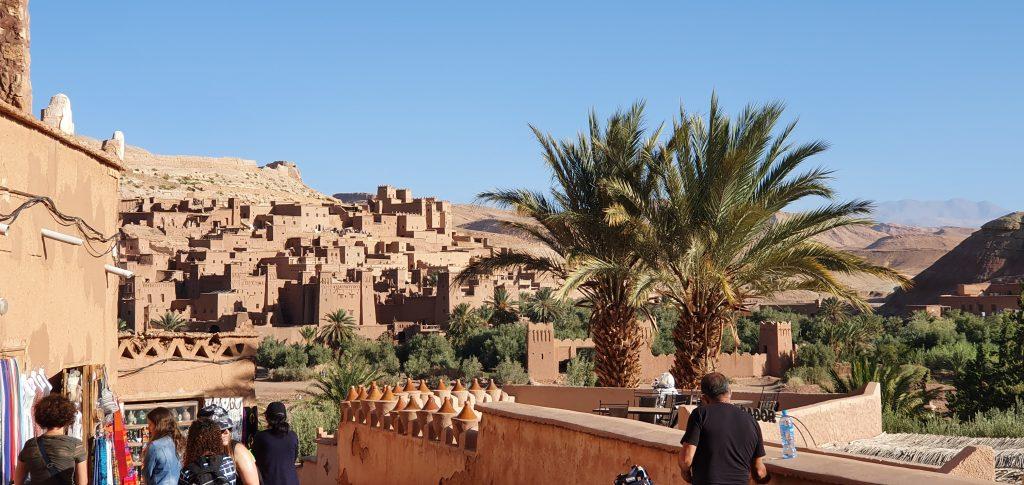
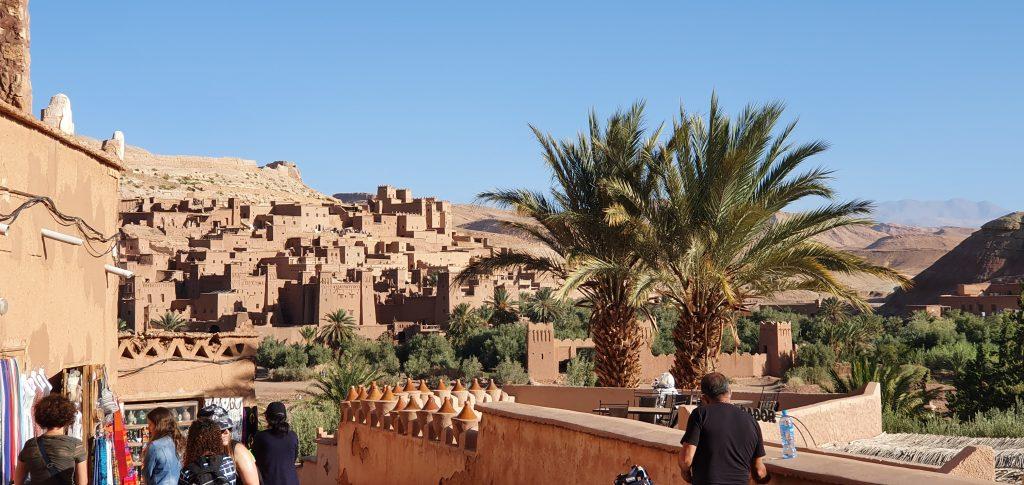
Descending from the pass, the landscape transforms into the dry, ochre-toned terrain of the pre-Saharan south. The first major stop is Ait Ben Haddou, a fortified village (ksar) that has been designated a UNESCO World Heritage Site and has served as a filming location for numerous major films and television productions.
The ksar rises from the banks of the Ounila River, its earthen towers and crenellated walls creating a skyline that looks like something from a fantasy novel. The site has been continuously inhabited for centuries, though most residents have now moved to the modern village across the river. Walking through the narrow lanes of the old ksar, climbing to the granary at the summit, and taking in the views of the surrounding valley is an essential experience.
Plan to spend one to two hours exploring Ait Ben Haddou. The best light for photography is in the morning, when the ksar catches the golden light from the east. A local guide can add valuable context about the site’s history and architecture.
Ouarzazate: Gateway to the Desert
Continuing east from Ait Ben Haddou, you reach Ouarzazate, a modern town that serves as the administrative capital of the region and the primary gateway to Morocco’s deep south. Ouarzazate is known as the “Hollywood of Africa” due to its role as a major filming location, and the Atlas Studios on the outskirts of town are worth a visit for film enthusiasts.
The Taourirt Kasbah in the center of town is another impressive example of southern Moroccan architecture. Built by the Glaoui dynasty in the 19th century, its decorated towers and intricate plasterwork provide a glimpse into the region’s feudal past.
Ouarzazate is a natural place to spend the first night, with a good selection of hotels, riads, and restaurants. The town also has the last major supermarket and ATM facilities before the more remote stretches ahead, so stock up on any supplies you might need.
Day 2: Ouarzazate to Dades Gorge
Distance: Approximately 160 km
Driving time: 3-4 hours (with stops)
Key stops: Skoura, Valley of Roses, Dades Valley, Dades Gorge
Skoura and the Valley of a Thousand Kasbahs
Heading east from Ouarzazate along the N10, the road enters the Skoura Oasis, a vast palm grove dotted with crumbling kasbahs and fortified granaries. This area is known as the Valley of a Thousand Kasbahs, and the density of traditional architecture here is remarkable.
The most impressive individual kasbah in the area is the Amerhidil Kasbah, a beautifully restored fortified house that is featured on the Moroccan 50-dirham banknote. Some kasbahs in the area have been converted into guesthouses, offering a unique accommodation option for those who want to linger.
A walk through the palm grove is a wonderful way to experience this landscape. The irrigation channels, date palms, olive trees, and scattered kasbahs create a scene that has changed little in centuries.
The Valley of Roses
Continuing east, the road passes through El-Kelaa M’Gouna and the Valley of Roses. This region is famous for its Damascene rose cultivation, and in late April and early May, the valley erupts in pink blooms and the air is heavy with fragrance. The annual Rose Festival, held in May, is one of the most colorful events in southern Morocco.
Even outside of rose season, the valley is beautiful, with its terraced fields, dramatic rock formations, and the distant snow-capped peaks of the Mgoun Massif providing a stunning backdrop. Rose water and rose oil products are available from cooperatives throughout the valley and make excellent souvenirs.
Dades Valley and the Gorge
The Dades Valley is one of the most scenically dramatic stretches of the entire route. The road follows the Dades River upstream into increasingly narrow and spectacular terrain. The valley walls rise steeply on either side, displaying layers of red, orange, and grey rock that have been sculpted by erosion into bizarre shapes, including formations known locally as “monkey fingers” for their resemblance to clusters of stone digits.
The road into the gorge itself is one of the most thrilling drives in Morocco. A series of tight switchbacks climbs steeply up the gorge wall, offering vertiginous views down into the narrow canyon below. The switchback section, visible from a distance as a zigzag etched into the cliff face, has become one of the most photographed road features in the country.
At the head of the gorge, the valley opens into a high plateau with scattered Berber villages and excellent hiking opportunities. Several small hotels and guesthouses along the gorge road offer accommodation with panoramic views, making this an ideal place to spend the second night.
Day 3: Dades Gorge to Todra Gorge and Erfoud
Distance: Approximately 170 km
Driving time: 3-4 hours (with stops)
Key stops: Tinghir, Todra Gorge, Erfoud, Ziz Valley
Tinghir and the Approach to Todra
Returning to the main road and continuing east, you reach Tinghir, a pleasant town set within a large and beautiful palm oasis. The view from the hillside above town, looking out over the green ribbon of the oasis stretching through the arid landscape, is one of the classic panoramas of southern Morocco.
Tinghir serves as the gateway to Todra Gorge, one of the most spectacular natural features in Morocco and a highlight of any Marrakech to Sahara road trip.
Todra Gorge: Walls of Stone
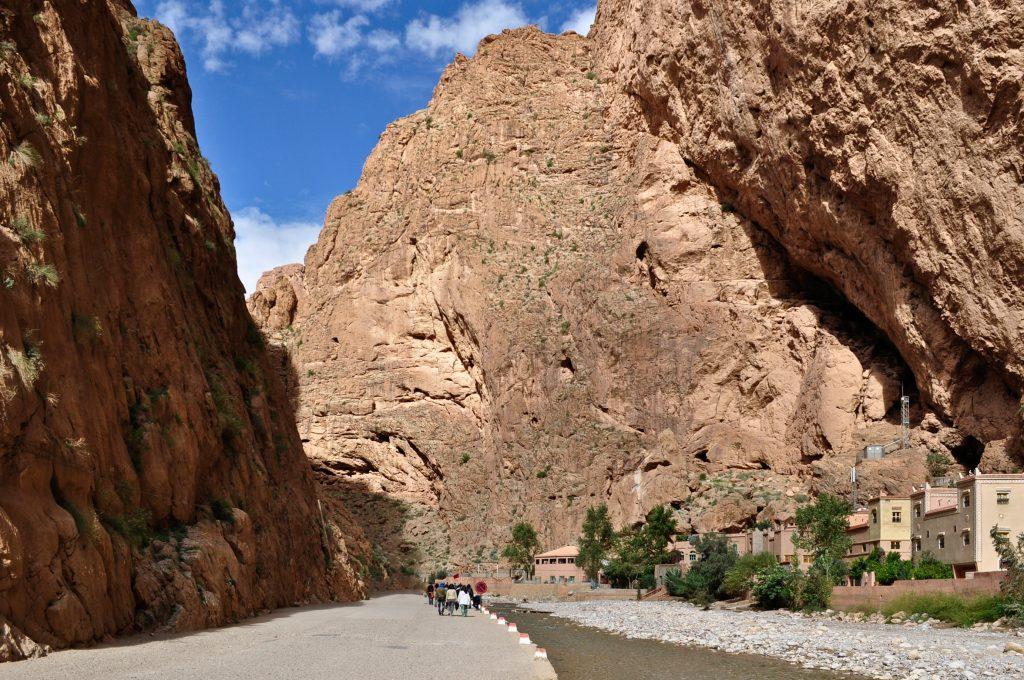
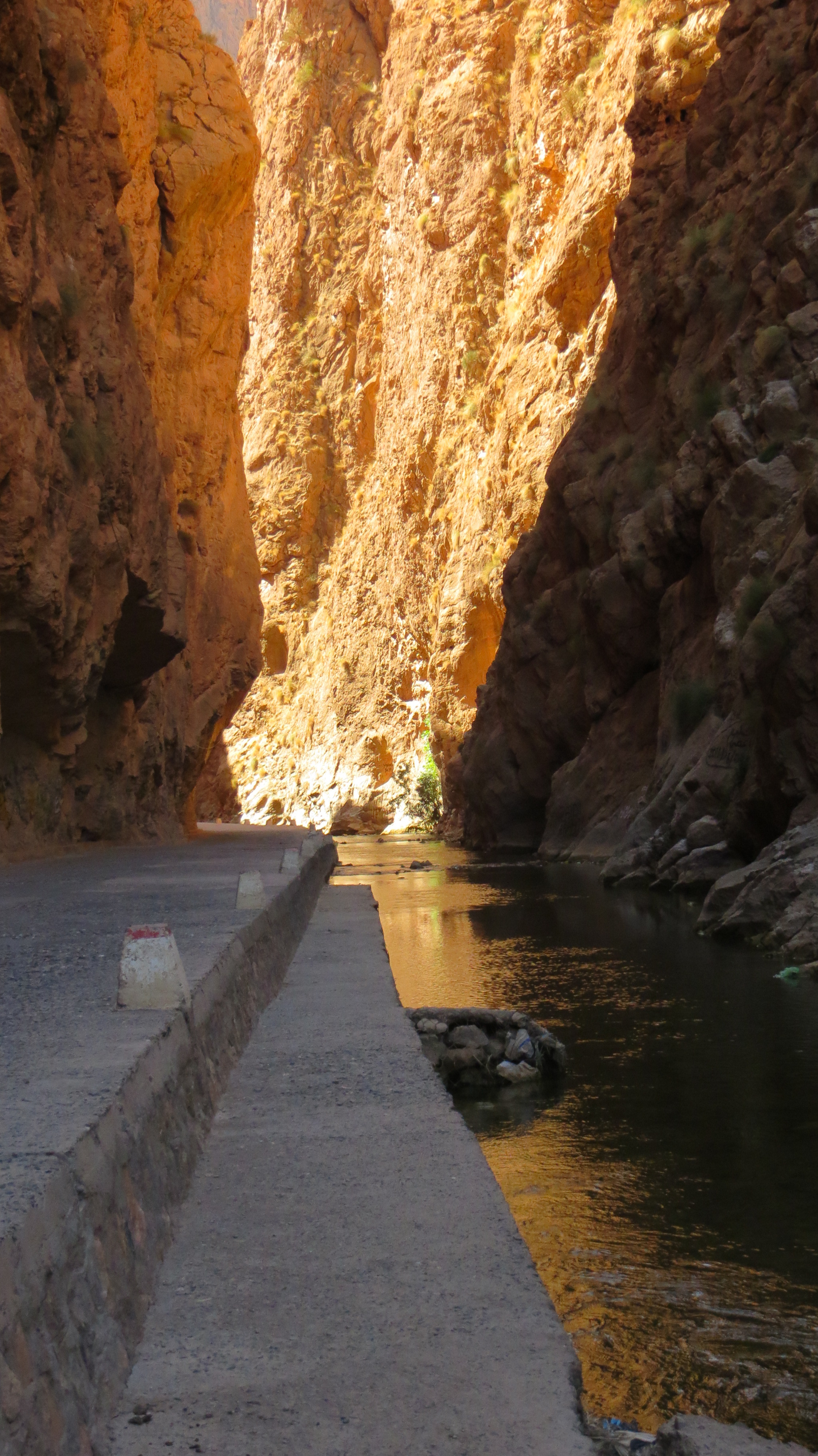
Todra Gorge is a narrow canyon carved through the eastern High Atlas by the Todra River. At its narrowest point, the gorge is just 10 meters wide, with sheer limestone walls rising 300 meters on either side. The scale is breathtaking, and standing at the base of these towering cliffs is a humbling experience.
The gorge is a popular destination for rock climbers, with routes of varying difficulty on the vertical and overhanging walls. For non-climbers, walking through the gorge on the paved road and along the river bed is equally rewarding. The light in the gorge changes throughout the day as the sun moves across the narrow opening overhead, creating dramatic shifts in color and shadow.
There are several small cafes and hotels at the mouth of the gorge, and having lunch here with the canyon walls rising overhead is a memorable experience. Plan to spend one to two hours exploring the gorge before continuing your journey.
The Ziz Valley and Erfoud
From Tinghir, the road continues east toward Erfoud, passing through increasingly arid terrain that marks the transition from mountain to desert. The most scenic section is the descent through the Ziz Gorge, where the road drops through a narrow, red-walled canyon before emerging into the wide Ziz Valley.
The Ziz Valley is one of Morocco’s largest oases, a green lifeline stretching through the desert fed by the river that flows from the Atlas Mountains. The contrast between the emerald palm groves and the barren, rocky desert surrounding them is striking.
Erfoud is the last significant town before the Sahara. It is known as a center of the fossil trade, and the surrounding area is rich in Devonian-era marine fossils, particularly ammonites and trilobites. Fossil shops and workshops line the roads, and a visit to a fossil polishing workshop is an interesting way to understand the geological history of the region.
Erfoud or the nearby town of Rissani, the historical capital of the Tafilalt oasis and the cradle of the Alaouite dynasty that still rules Morocco, make good bases for the night if you prefer a town setting. Alternatively, press on to Merzouga, just 50 kilometers further, to arrive at the dunes before sunset.
Day 4: Merzouga and the Sahara
Distance: Approximately 50 km from Erfoud
Key experience: Erg Chebbi dunes, camel trek, desert camp
Arrival at Erg Chebbi
The final stretch from Erfoud to Merzouga is a study in anticipation. The terrain flattens into a rocky desert plain known as hammada, and then, gradually, the dunes of Erg Chebbi appear on the eastern horizon. At first they seem like a mirage, a golden line shimmering above the flat ground. As you draw closer, their true scale becomes apparent. Erg Chebbi’s highest dunes reach 150 meters, and the entire dune field stretches roughly 22 kilometers from north to south and 5 kilometers from east to west.
Merzouga, a small village on the western edge of the erg, serves as the base for desert excursions. From here, you can set out by camel, by 4×4, or on foot into the dunes for the experience that the entire journey has been building toward.
The Camel Trek to Camp
The classic Sahara experience begins in the late afternoon with a camel trek from the edge of the dunes into the heart of the erg. The journey takes approximately 90 minutes, and the rhythm of the camel’s gait, the silence of the desert, and the ever-changing play of light on the sand create a meditative atmosphere that washes away the memory of roads and vehicles.
As you ride deeper into the dunes, the outside world disappears completely. There are no buildings, no roads, no sounds beyond the soft footfall of the camels and the occasional whisper of wind across sand. The feeling of remoteness and timelessness is extraordinary.
Desert Camp and Night in the Sahara
Arriving at camp as the sun begins its descent is a moment you will never forget. The dunes surrounding the camp glow in shades of gold, amber, and copper, and the sky transitions through a spectrum of colors that no photograph can fully capture.
After settling into your tent, climb the nearest high dune to watch the final minutes of sunset. The view from the top, a 360-degree panorama of dunes extending to every horizon, is the defining image of the Sahara experience.
The evening at camp unfolds at its own leisurely pace: a traditional dinner by candlelight, Berber music around the campfire, and then the main event: the night sky. With no light pollution for hundreds of kilometers, the stars in the Sahara are overwhelming in their density and brilliance. The Milky Way stretches from horizon to horizon, and the silence is absolute.
The Return Journey: Options and Variations
The return from the Sahara to Marrakech can follow the same route in reverse, but several variations add freshness and new experiences to the journey.
The Northern Loop via the Ziz Gorge and Midelt
Instead of returning directly to Ouarzazate, you can head north from Erfoud through the spectacular Ziz Gorge to the town of Midelt, then cross the Middle Atlas via Ifrane and continue to either Fez or Marrakech. This route adds variety and includes the cedar forests and lake landscapes of the Middle Atlas, a striking contrast to the arid south.
The Southern Route via Draa Valley
An alternative return route heads southwest from Ouarzazate through the Draa Valley, Morocco’s longest river valley and home to one of the most stunning palm oasis landscapes in the country. The road passes through Agdz, Zagora, and eventually reaches the desert fringes near M’Hamid, offering a completely different desert landscape from Erg Chebbi.
Practical Tips for the Road Trip
Driving Conditions
The main roads along the Marrakech to Sahara route (N9, N10, and connecting national roads) are generally well-maintained and suitable for standard vehicles. The road through Tizi n’Tichka and the switchbacks into Dades Gorge require careful driving due to tight curves and occasional slow-moving trucks, but they are fully paved and manageable for confident drivers.
A 4×4 vehicle is not necessary for the main route but is required for off-road excursions and for reaching some remote areas around Merzouga. If you plan to drive into the dunes themselves, a 4×4 with experienced driving is essential, as even a few meters of soft sand can immobilize a standard vehicle.
Fuel and Supplies
Fill your tank whenever you pass a fuel station, particularly in the southern sections where distances between towns are greater. Ouarzazate, Tinghir, and Erfoud all have reliable fuel stations. Carry drinking water in the vehicle, especially during warmer months, and bring snacks for the longer stretches between stops.
Best Time to Drive the Route
The route is accessible year-round, but the most comfortable conditions are found between October and April, when temperatures in the desert south are manageable and the Atlas passes are usually clear. Winter can bring snow to Tizi n’Tichka, occasionally closing the pass for short periods, so check conditions in advance during December through February.
Summer driving is possible but demanding, with temperatures in the desert regularly exceeding 40 degrees Celsius. If traveling in summer, start driving early in the morning, rest during the midday heat, and ensure your vehicle’s air conditioning is functioning well.
Guided vs. Self-Drive
While the route can be driven independently, many travelers choose to join an organized tour that handles all logistics, including transportation, accommodation, meals, and expert guidance at each stop. This approach allows you to fully relax and absorb the experience without the stress of navigation, parking, and finding accommodation in unfamiliar towns.
At Duna Daurada, our Marrakech to Sahara tours cover all the highlights described in this guide, with knowledgeable local guides who bring each stop to life with context, stories, and access to experiences that independent travelers might miss. We offer group departures as well as private custom tours that can be tailored to your pace, interests, and preferred accommodation level.
Beyond the Road: Activities Along the Way
The Marrakech to Sahara route is more than a scenic drive. It is a corridor of activities and experiences that include hiking in the Dades and Todra Gorges, visiting traditional Berber villages, exploring kasbahs and fortified granaries, shopping for local crafts and fossils, and of course, the camel trekking, sandboarding, and stargazing that await in the Sahara itself.
For travelers who want to extend their adventure, options include multi-day treks in the High Atlas, overnight stays in remote Berber villages, cooking classes with local families, and extended desert camping expeditions deeper into the Sahara.
A Journey That Defines Morocco
The road from Marrakech to the Sahara is more than a travel route. It is a narrative arc that takes you through the full spectrum of Moroccan landscapes, cultures, and experiences. From the bustling energy of Marrakech to the profound silence of the desert, from the green valleys of the Atlas to the golden expanse of Erg Chebbi, this journey reveals Morocco in all its diversity and beauty.
It is the kind of trip that stays with you long after you return home, one that reshapes your understanding of what landscape can be and what travel can offer. The images you carry back, both in your camera and in your memory, will be among the most vivid and cherished of your life.
Find the perfect tour for your Marrakech to Sahara adventure and let us help you experience this extraordinary journey. Or reach out to our team to start planning a trip that is perfectly tailored to your interests and schedule.