The Atlas Mountains form the dramatic spine of Morocco, stretching over 2,500 kilometers from the Atlantic coast in the southwest to the Mediterranean shores of Tunisia in the northeast. Within Morocco, the range divides the fertile coastal plains from the arid pre-Saharan landscapes, creating a world of deep valleys, terraced hillsides, snow-dusted peaks, and ancient villages that feel untouched by the modern age.
For hikers and trekkers, the Atlas Mountains represent one of the most rewarding destinations in North Africa. The trails here offer everything from gentle half-day walks through walnut groves and along irrigation channels to multi-day summit attempts on Jebel Toubkal, the highest peak in North Africa at 4,167 meters. And unlike many of the world’s premier mountain destinations, the Atlas remains refreshingly uncrowded, affordable, and rich with cultural encounters that are as memorable as the landscapes.
This guide covers the essential information you need to plan a hiking trip in the Atlas Mountains, from trail selection and difficulty levels to practical logistics and the possibility of combining your mountain adventure with a Sahara desert experience.
Understanding the Atlas Mountain Ranges
Morocco’s Atlas Mountains are actually composed of three distinct ranges, each with its own character and trekking opportunities.
The High Atlas
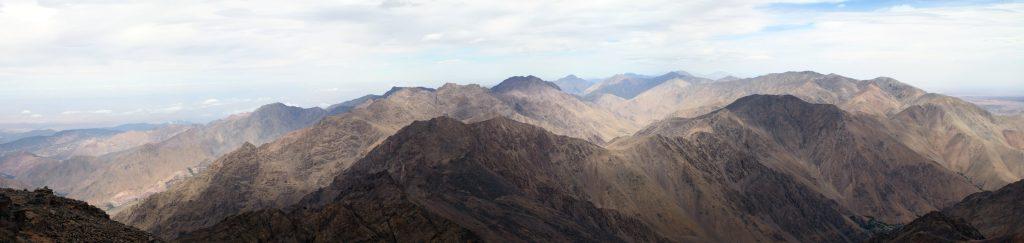
The High Atlas is the most dramatic and popular range for trekking. It runs roughly east to west through central Morocco, with peaks exceeding 4,000 meters and deep valleys carved by rivers and centuries of snowmelt. The region around Imlil, about 90 minutes south of Marrakech, serves as the gateway to Jebel Toubkal and is the most developed area for trekking infrastructure, with established trails, mountain refuges, and experienced local guides.
Beyond the Toubkal massif, the High Atlas offers vast tracts of less-visited terrain. The Mgoun Massif, centered on Jebel Mgoun at 4,071 meters, provides outstanding multi-day trekking through the Valley of the Roses and the remote Ait Bouguemez Valley, often called the “Happy Valley.” The Siroua Massif, a volcanic formation bridging the High Atlas and Anti-Atlas, offers surreal landscapes and some of the most isolated trekking in Morocco.
The Middle Atlas
The Middle Atlas is a gentler, greener range located between Fez and the High Atlas. Its cedar forests, lakes, and rolling hills create a landscape that feels more European than African. Hiking here is generally less strenuous than in the High Atlas and is well suited to those seeking relaxed nature walks, birdwatching, and cultural encounters with the local Amazigh communities.
The town of Ifrane, sometimes called the “Switzerland of Morocco,” serves as a good base for exploring the Middle Atlas. The cedar forests near Azrou are home to Barbary macaques, the only primate species native to North Africa.
The Anti-Atlas
South of the High Atlas, the Anti-Atlas is the oldest of the three ranges and the least visited by trekkers. Its arid, rocky landscapes are strikingly different from the lush valleys of the High Atlas, with dramatic granite formations, ancient granaries, and palm-filled oases. Trekking in the Anti-Atlas is adventurous and remote, best suited to experienced hikers comfortable with minimal infrastructure.
The Top Trails and Treks
Jebel Toubkal Summit Trek
The ascent of Jebel Toubkal is the most popular trek in Morocco and one of the most accessible high-altitude summit experiences in the world. At 4,167 meters, Toubkal is the highest peak in North Africa, yet it requires no technical climbing skills and can be completed by anyone with reasonable fitness and determination.
The standard route begins in the village of Imlil at roughly 1,740 meters and follows a well-marked trail through the village of Aroumd and up the Mizane Valley to the Toubkal Refuge at 3,207 meters. Most trekkers spend the night at the refuge before making the final summit push early the following morning. The ascent from the refuge to the summit takes approximately three to four hours and involves steep, rocky terrain with some scrambling near the top.
The views from the summit are extraordinary, encompassing the entire High Atlas range, the Saharan fringes to the south, and on clear days, the distant Atlantic coast. The total trek takes two days and one night for the standard itinerary, though a three-day version that includes additional acclimatization time and side trips is recommended for those less accustomed to altitude.
Difficulty: Moderate to challenging. No technical skills required, but good fitness and comfort with steep, rocky terrain is essential. Altitude can affect some trekkers above 3,500 meters.
Best season: April to June and September to November. Summer is very hot at lower elevations, and winter brings snow and ice to the upper sections, requiring crampons and ice axes.
Ait Bouguemez Valley Circuit
The Ait Bouguemez Valley, nestled deep in the central High Atlas, is one of the most beautiful and culturally rich trekking destinations in Morocco. Known as the Happy Valley, it is a patchwork of terraced fields, traditional earthen villages, and towering peaks that feels genuinely remote despite being accessible by road from Marrakech.
A typical circuit of the valley takes four to six days and visits multiple Berber villages, crossing high passes of up to 3,200 meters and passing through landscapes that shift from cultivated valley floors to high-altitude pastures and rocky ridgelines. The trekking infrastructure here is less developed than around Toubkal, which adds to the sense of adventure but also means that hiring a local guide is essential.
Difficulty: Moderate. The daily distances are manageable, but the cumulative elevation gain and the altitude of the passes require good fitness.
Best season: May to October. The valley is snowbound in winter, and some passes may remain closed until late spring.
Mgoun Traverse
The traverse of Jebel Mgoun at 4,071 meters is one of the premier multi-day treks in the Atlas. The route typically takes five to seven days and crosses some of the most spectacular and remote terrain in the range, including the dramatic Mgoun Gorge, high-altitude plateaus, and traditional villages with limited contact with the outside world.
This trek is more demanding than the Toubkal ascent, both in terms of daily distances and the sustained altitude. Nights are spent in tents or in simple village guesthouses, and the route requires careful navigation, making a knowledgeable guide essential.
Difficulty: Challenging. Long days, sustained altitude, and remote terrain make this a trek for experienced hikers.
Best season: June to September, when the high passes are clear of snow.
Imlil to Setti Fatma Day Hike
For those seeking a shorter, less demanding option, the trail from Imlil over the Tizi n’Tamatert pass to the Ourika Valley and the village of Setti Fatma is an excellent day hike or overnight trek. The trail crosses a 2,279-meter pass with views of Toubkal and descends through terraced villages and walnut orchards into the lush Ourika Valley.
Setti Fatma is known for its seven waterfalls, the lower ones accessible by a short but steep hike from the village. The entire route offers a wonderful cross-section of High Atlas landscapes and village life.
Difficulty: Easy to moderate. Suitable for most fitness levels with a reasonable pace.
Best season: March to November.
Hidden Berber Villages: The Cultural Heart of the Atlas
One of the most rewarding aspects of hiking in the Atlas Mountains is the opportunity to visit Berber villages that have maintained their traditional way of life for centuries. These villages, built from local stone and earth and clinging to steep hillsides above terraced fields, offer a glimpse into a way of life that is deeply connected to the mountain environment.
Village Life and Hospitality
Berber communities in the Atlas are renowned for their hospitality. It is common for trekkers passing through villages to be invited for tea, and in many areas, families open their homes as simple guesthouses, offering a mattress on the floor, home-cooked meals, and genuine warmth. These encounters are among the most meaningful experiences that the Atlas has to offer.
Village economies are based on agriculture, with terraced fields of barley, wheat, and vegetables irrigated by ancient channel systems called seguias. Walnut, almond, and apple trees line the valleys, and livestock grazing on the high pastures is an important seasonal activity.
Notable Villages to Visit
Imlil serves as the primary gateway to Toubkal and has developed a modest infrastructure of guesthouses and cafes while retaining its traditional character. The views of the surrounding peaks from the village are stunning.
Aroumd, a 45-minute walk above Imlil, is a beautifully preserved village with traditional Berber architecture and panoramic views. It is the last village before the Toubkal Refuge and a lovely place to spend a night.
Ait Bouguemez villages throughout the Happy Valley maintain an exceptionally traditional way of life. The village of Tabant serves as the valley’s main center, while smaller settlements like Agouti and Ifrane offer even more authentic experiences.
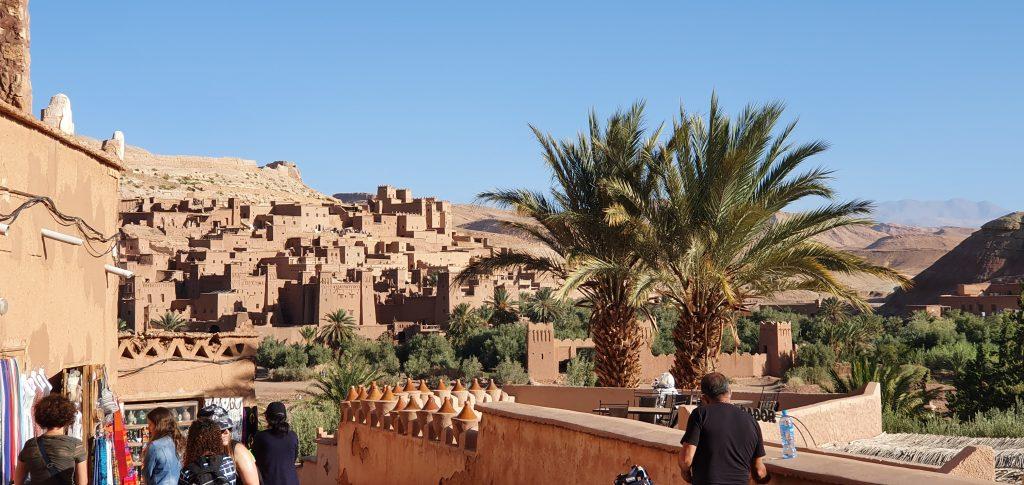
Tighza and Megdaz, in the Mgoun region, are remote villages where traditional granaries (agadirs) are still in use and daily life follows centuries-old rhythms.
Practical Tips for Atlas Mountain Hiking
Hiring a Guide
While some trails in the Atlas can be hiked independently, hiring a local guide is strongly recommended for most routes. Guides provide invaluable knowledge of trail conditions, weather patterns, and local culture. They also support the local economy and can facilitate meaningful interactions with village communities that would be difficult for independent trekkers.
For summit attempts on Toubkal and multi-day treks like the Mgoun traverse, a guide is effectively essential. Routes can be poorly marked, weather changes rapidly at altitude, and the remoteness of some areas means that self-sufficiency in navigation is critical.
Licensed mountain guides in Morocco hold official credentials from the Centre de Formation aux Metiers de Montagne (CFAMM) in Tabant. When booking a guide, verify their credentials and discuss the itinerary, pace, and logistics in advance.
What to Pack
Packing for an Atlas trek depends on the season, altitude, and duration, but some essentials apply across all conditions. Sturdy hiking boots with ankle support are non-negotiable on the rocky terrain. Layered clothing is essential, as temperatures can vary dramatically between valley floors and mountain passes, even within a single day. A warm fleece or down jacket, a waterproof shell, sun protection (hat, sunscreen, sunglasses), and a headlamp should be in every trekker’s pack.
For multi-day treks, a sleeping bag rated to at least minus 5 degrees Celsius is advisable for nights at higher elevations, even in summer. Mountain refuges provide mattresses but not bedding. Trekking poles are helpful on the steep, loose-rock descents that characterize many Atlas trails.
Altitude Considerations
While the Atlas Mountains are not as high as the Himalayas or Andes, altitude sickness can still affect trekkers on routes above 3,000 meters, particularly those who ascend quickly from sea level. Symptoms include headache, nausea, fatigue, and shortness of breath.
The best prevention is gradual acclimatization. If you are planning a Toubkal summit, consider spending an extra day at the refuge or adding a lower-altitude warm-up hike before your ascent. Stay well hydrated, avoid alcohol at altitude, and descend immediately if symptoms worsen.
Accommodation on the Trail
Accommodation options in the Atlas range from mountain refuges and village guesthouses to wild camping. The CAF (Club Alpin Francais) refuge below Toubkal is the most well-known, offering dormitory bunks, basic meals, and a communal atmosphere. Village guesthouses (gites) provide a more cultural experience, with home-cooked meals and the chance to interact with local families.
For those who prefer more comfort, several lodges and ecolodges in the Imlil area and throughout the Ait Bouguemez Valley offer private rooms, hot showers, and quality meals while maintaining a connection to the local environment and culture.
Combining Atlas Trekking with a Sahara Desert Tour
One of the great advantages of Morocco’s geography is that the Atlas Mountains and the Sahara Desert are closely connected, making it entirely feasible to combine a mountain trek with a desert camping experience in a single trip.
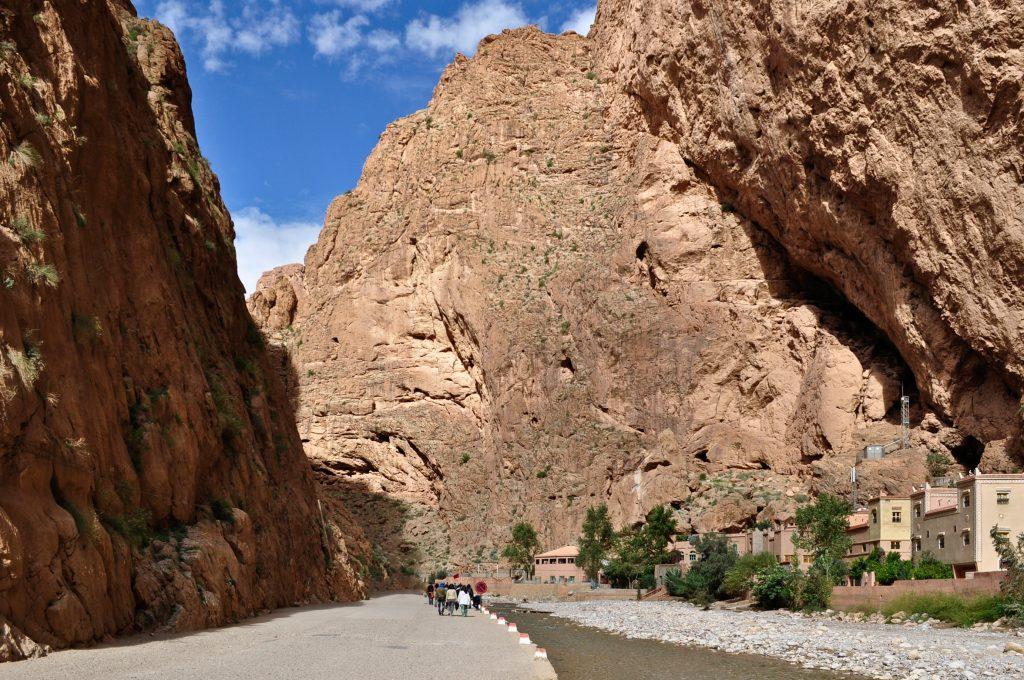
The most natural combination starts with a trek in the High Atlas, perhaps a two-day Toubkal ascent or a multi-day walk in the Ait Bouguemez Valley, followed by a journey south through the spectacular Dades and Todra Gorges to the Sahara dunes of Erg Chebbi near Merzouga.
This combination offers an extraordinary diversity of landscapes and experiences within a single week or ten days. You move from snow-capped peaks and green valleys to dramatic gorges and canyons, and finally to the golden dunes of the Sahara, experiencing the full range of Moroccan geography and culture along the way.
At Duna Daurada, we specialize in creating itineraries that seamlessly combine Atlas trekking with Sahara desert adventures. Browse our available tours to find a trip that includes both mountains and desert, or contact us to design a custom itinerary that matches your fitness level, interests, and available time.
When to Go: Seasonal Planning
The ideal time for Atlas Mountain hiking depends on your target altitude and the specific trek you have in mind.
Spring (March to May) brings wildflowers, flowing rivers, and comfortable temperatures at lower elevations. Higher passes may still hold snow in March and early April. This is an excellent time for valley walks and lower-altitude treks.
Summer (June to August) is the peak season for high-altitude trekking, with clear passes and long days. Valley floors can be extremely hot, so plan to start early and rest during the heat of the day. The Toubkal summit is most accessible during this period.
Autumn (September to November) offers stable weather, warm days, cool nights, and the golden colors of walnut and poplar trees in the valleys. This is many experienced trekkers’ favorite season, combining comfortable conditions with fewer crowds.
Winter (December to February) transforms the High Atlas into a snow-covered landscape. Winter trekking is possible but requires appropriate equipment and experience. The Toubkal summit becomes a genuine mountaineering objective with crampons and ice axes needed. Lower valleys remain accessible and offer a beautifully quiet experience.
Getting Started: Planning Your Atlas Adventure
The Atlas Mountains are remarkably accessible. Imlil, the main trekking hub, is just a 90-minute drive from Marrakech, making it possible to begin a trek on the same day you arrive in Morocco. For multi-day treks in more remote areas, a transfer of three to four hours from Marrakech may be required.
The easiest way to plan an Atlas trekking experience is through a tour operator who can arrange guides, transportation, accommodation, and meals. This is particularly valuable for multi-day treks where logistics become more complex and local knowledge makes a significant difference to the quality of the experience.
Explore our range of activities that include Atlas Mountain experiences, or use our tour finder to discover trips that combine mountain trekking with other Moroccan adventures. Whether you are a seasoned trekker seeking a challenging summit or a casual hiker looking for a cultural walk through beautiful villages, the Atlas Mountains have a trail waiting for you.
The mountains are calling. All you need to do is lace up your boots and answer.