Somewhere in the vast silences of the Sahara, a family is breaking camp. The goatskin tent is folded and loaded onto a camel. A herd of goats is gathered. Children help their parents pack cooking implements into woven saddlebags. By the time the sun clears the horizon, the family will be moving across the sand toward a seasonal grazing area their ancestors have used for generations.
Nomadic life in the Sahara is among the oldest continuous ways of living on Earth. For thousands of years, families have moved across this seemingly inhospitable landscape, following patterns dictated by water, grazing, and the rhythm of the seasons. Far from the desperate survival story that outsiders sometimes imagine, nomadic desert life is a sophisticated and deeply meaningful way of existing in harmony with one of the planet’s harshest environments.
This article explores the daily realities of Sahara nomads, the traditions that sustain them, and how their way of life is changing in the modern world. It also offers guidance on how to respectfully visit nomadic families during your Sahara tour.
Who Are the Sahara’s Nomads?
The Sahara is home to several distinct nomadic and semi-nomadic groups, each with its own language, customs, and history.
The Amazigh (Berber) Nomads
In the Moroccan Sahara, the predominant nomadic people are the Amazigh, commonly known as Berbers, though many prefer the indigenous term Amazigh (meaning “free people”). The Amazigh have inhabited North Africa for at least 4,000 years, long before the Arab conquests of the 7th century. In the southeastern regions near Merzouga and the Erg Chebbi dunes, the Ait Atta and Ait Khebbach tribes are the most prominent nomadic groups.
These communities speak Tamazight, a Berber language with several regional dialects, and maintain cultural traditions that predate Islam, though most are devoutly Muslim today. Their identity is deeply tied to the land, the seasons, and the communal bonds that make survival in the desert possible.
The Tuareg
Further south and east, the Tuareg people occupy a vast territory spanning southern Algeria, Mali, Niger, Libya, and Burkina Faso. Known as the “Blue People” for their indigo-dyed clothing that stains the skin, the Tuareg have a matrilineal social structure (unusual in the region) and a rich tradition of poetry, music, and craftsmanship. While most Tuareg live outside Morocco, their cultural influence extends into the southeastern Sahara, and travelers sometimes encounter Tuareg traders and musicians in Moroccan desert towns.
The Sahrawi
In the western Sahara, the Sahrawi people maintain nomadic traditions linked to camel herding and trade. Their culture blends Berber, Arab, and sub-Saharan African influences, and their history is intertwined with the complex politics of the Western Sahara region.
Daily Life in a Nomadic Camp
To an outsider, a nomadic camp might look simple: a dark tent, a fire pit, some animals, a few possessions. But this simplicity is deceptive. Every element of the camp is purposeful, refined by centuries of experience.
The Tent
The traditional Berber nomad tent, called a khaima, is an engineering marvel adapted to desert conditions. It is constructed from strips of goat and camel hair woven on portable looms. The dark fabric absorbs heat during the day, creating an updraft that pulls cooler air in from the sides. At night, when temperatures plummet, the same fabric retains warmth. When it rains (rare but not unknown in the Sahara), the natural lanolin in the hair fibers causes them to swell, making the tent nearly waterproof.
A typical tent measures roughly 4 by 6 meters and can be erected by two people in under an hour. The interior is divided by woven hangings into living and sleeping areas. Carpets cover the sand floor. The tent faces away from the prevailing wind, and its sides can be raised or lowered to regulate airflow.
Setting up and striking camp is a communal activity. Everyone has a role, including children, who learn tent construction from an early age.
Water
Water is the defining concern of nomadic life. Every migration pattern, every camp location, and every daily routine revolves around access to water. Nomads know the locations of wells, springs, and seasonal water sources across their territory with extraordinary precision. This knowledge, passed from generation to generation, is effectively a detailed mental map of the desert’s hidden hydrology.
Families carry water in goatskin bags (guerba), which keep the water cool through evaporation. A family might travel a full day’s journey between water sources, and managing supply carefully is a skill learned from childhood. Water is never wasted. Cooking water is reused, washing is minimal, and every drop has value.
Food and Cooking
Nomadic cuisine is built around what the desert provides and what can travel. The staples are dates, milk (from goats and camels), bread, couscous, and dried meat. Meals are simple but nourishing, designed to fuel people who spend their days walking, herding, and working in extreme conditions.
Bread is baked daily, often using a method called taguella or “sand bread.” The dough is buried under hot coals and sand, where it bakes into a dense, slightly smoky loaf. The bread is brushed clean and broken apart by hand, then eaten with olive oil, honey, or a simple sauce.
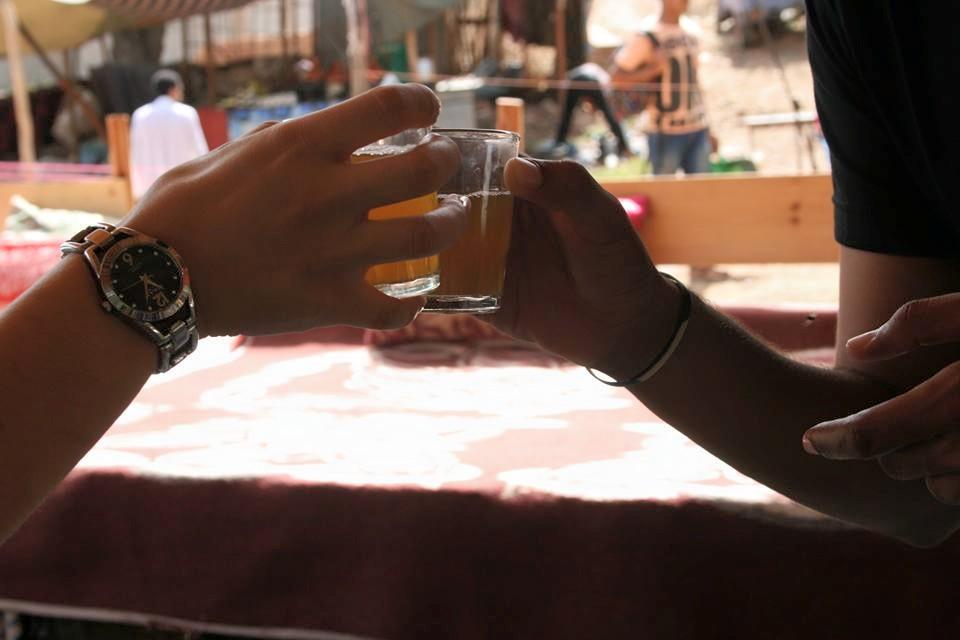
Mint tea is the social lubricant of desert life. Preparing and serving tea is an elaborate ritual that punctuates the day. The tea is brewed strong with fresh mint and generous amounts of sugar, then poured from a height to create a froth. Three glasses are traditionally served: the first is strong, the second is sweet, and the third is gentle.
Meat, usually goat or lamb, is reserved for special occasions and guests. When a visitor arrives at a nomad camp, hospitality demands that the best food available is prepared. This generosity is a deeply held cultural value, not a performance for tourists.
Livestock
Animals are the foundation of nomadic wealth and survival. Goats provide milk, meat, and hair for weaving. Sheep offer wool and meat. Camels, the aristocrats of the herd, serve as transport, carry heavy loads, produce milk, and represent social status.
A family’s herd might number from a dozen to several hundred animals, depending on the quality of recent grazing seasons. Herding is a daily responsibility shared among family members. Children often tend the goats, learning to read animal behavior and desert terrain at the same time.
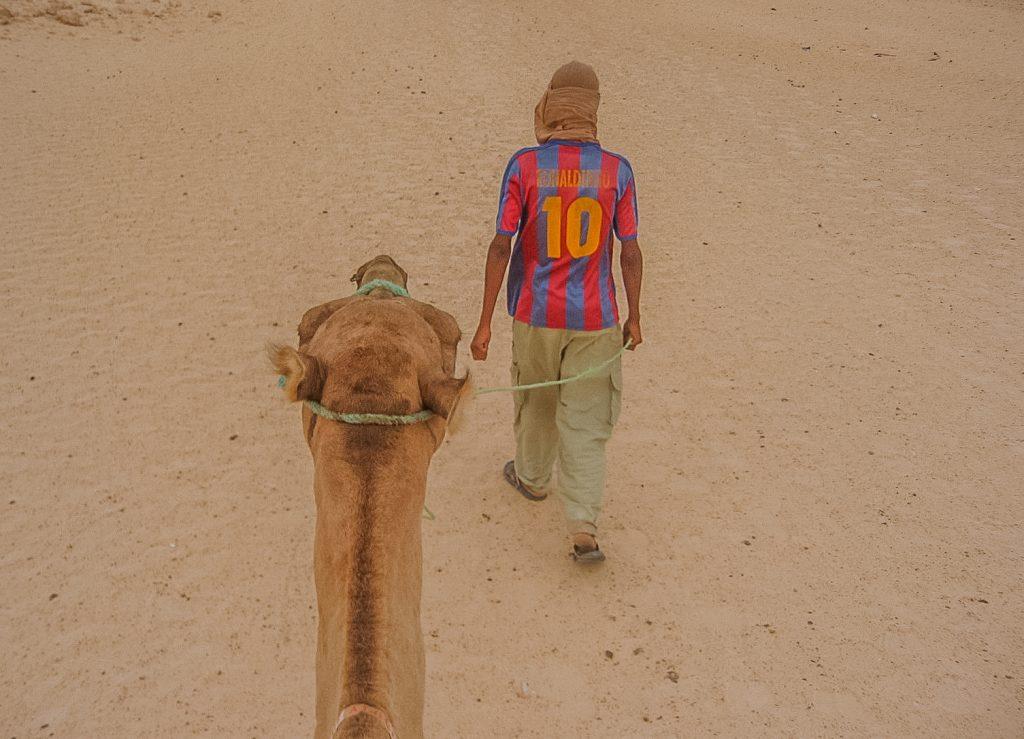
Camels hold a special place in nomadic culture. A good camel is named, its genealogy remembered, and its personality understood. Camels can go days without water, carry loads of up to 200 kilograms, and navigate terrain that would defeat any vehicle. In many ways, the camel made Saharan civilization possible.
Migration Patterns and Seasonal Rhythms
Nomadic migration is not random wandering. It follows deeply established patterns governed by season, rainfall, and the availability of grazing land.
The Annual Cycle
In the Moroccan Sahara, the typical migration pattern involves moving between lower desert areas in winter and higher ground or oasis regions in summer. Winter rains, when they come, trigger the growth of desert grasses in the lower elevations. Families move their herds to these temporary pastures, sometimes traveling 30 to 50 kilometers over several days.
As summer approaches and the lower pastures dry out, families move to areas near permanent water sources or into the shade of oasis palm groves. Some semi-nomadic families spend the hottest months in or near towns, returning to mobile life when the heat breaks.
Reading the Land
Nomads possess an intimate understanding of their environment that goes far beyond what any guidebook or GPS can offer. They read the sky for weather signs, identify plant species that indicate underground water, navigate by stars and dune patterns, and predict grazing conditions based on subtle changes in wind and temperature.
This ecological knowledge is accumulated over lifetimes and transmitted through stories, songs, and direct teaching. A child growing up in a nomadic family absorbs an education in desert survival that begins at birth and never really ends.
Territorial Agreements
Nomadic territories are not defined by fences or formal boundaries, but they are real and respected. Different tribal groups have traditional rights to specific grazing areas, water sources, and migration routes. These rights are maintained through oral agreements, tribal councils, and a shared understanding of reciprocity. Conflicts over resources do arise, but they are typically resolved through negotiation and mediation rather than force.
Children and Education
One of the most common questions travelers ask about nomadic life concerns children. How do they learn? Do they go to school? Are they missing out?
Traditional Education
In the nomadic tradition, education is inseparable from daily life. Children learn by doing: herding animals, setting up camp, navigating the desert, preparing food, weaving, and managing water. They learn their community’s history, values, and practical skills through stories told around the fire and through direct participation in every aspect of camp life.
This education produces remarkably capable young people. A teenager raised in a nomadic family can navigate the desert by stars, treat a sick animal, build a shelter, find water, and manage a herd. These are not trivial skills; they represent a sophisticated body of knowledge refined over millennia.
Modern Schooling
In recent decades, the Moroccan government has established mobile schools and boarding programs aimed at providing formal education to nomadic children. These initiatives have had mixed results. Mobile schools, which travel with or near nomadic communities, offer basic literacy and numeracy but often lack resources and consistent staffing.
Boarding schools in nearby towns provide a more complete education but require children to leave their families for extended periods. This creates a painful tension: families want their children to succeed in the modern economy but are reluctant to give up the cultural transmission that happens when children grow up in the nomadic setting.
Some families have found a middle ground, sending children to school during certain months and bringing them back to the desert during migration seasons. This compromise allows children to gain formal education while maintaining their connection to nomadic life.
The Role of Women in Nomadic Society
Women occupy a central role in Berber nomadic life, though their contributions are not always visible to outside observers.
Domestic Authority
The tent is the woman’s domain. Women are responsible for constructing and maintaining the khaima, and in many traditions, the tent is considered the woman’s property. A woman who leaves her marriage takes the tent with her. This gives women a form of material autonomy that contradicts the stereotypes outsiders sometimes project onto desert societies.
Women also manage food preparation, water distribution, childcare, and much of the daily animal tending. They are the primary weavers, creating the textiles that serve as both practical objects and artistic expressions of cultural identity. Berber carpets and textiles from the Sahara region are recognized worldwide for their beauty and craftsmanship.
Social Influence
While men typically represent the family in external dealings, women wield significant influence within the family and the broader community. Important decisions about migration, marriages, and resource allocation often reflect women’s input. The matrilineal inheritance patterns among some Berber groups give women economic power that ensures their voices are heard.
How Nomadic Life Is Changing
Nomadic life in the Sahara is not a museum exhibit frozen in time. It is a living culture that has always adapted to changing circumstances, and the pace of change in recent decades has been dramatic.
Sedentarization
The single biggest change is the shift toward settled or semi-settled life. Drought, government policies that encourage permanent settlement, the appeal of modern amenities, and the desire for children’s formal education have all contributed to a steady decline in fully nomadic populations. Many families who were fully mobile a generation ago now maintain a permanent base (often a modest house in a desert town) and practice seasonal or partial nomadism.
This transition is not entirely voluntary. Extended droughts, linked in part to climate change, have reduced grazing land and water availability, making purely nomadic life increasingly difficult. Government programs that provide health care, education, and subsidies are tied to permanent addresses, creating practical incentives for settlement.
Technology
Even families that maintain a nomadic lifestyle have adopted certain technologies. Mobile phones have transformed communication in the desert. Solar panels charge batteries for phones and lights. Motorcycles and pickup trucks supplement camel transport for some tasks. Plastic water containers have largely replaced traditional goatskin bags.
These changes are practical adaptations, not cultural capitulations. Nomads have always adopted useful technologies when they encountered them. The adoption of the mobile phone is, in this sense, no different from the ancient adoption of the camel itself.
Tourism
Tourism has created new economic opportunities for nomadic and semi-nomadic families. Some families host visitors in their camps, offering tea, bread, and a glimpse of daily life. Others work as guides, camel handlers, or camp staff for tour operators. This income supplements traditional pastoralism and can help families maintain their desert lifestyle rather than abandoning it for urban employment.
However, tourism also introduces complications. The commodification of culture, the pressure to perform rather than simply live, and the environmental impact of increased traffic in fragile desert ecosystems are all concerns that responsible travelers should be aware of.
Visiting Nomad Families: How to Do It Respectfully
Meeting a nomadic family is one of the most memorable experiences available on a Sahara tour. It is also one that requires sensitivity and respect.
Go with a Guide
The most important step is to visit nomadic families through a reputable guided tour. A knowledgeable local guide serves as a cultural bridge, ensuring that the visit is welcome, appropriate, and mutually rewarding. Guides typically have personal relationships with nomadic families and can facilitate introductions in a way that respects social norms.
Showing up unannounced at a nomadic camp is not recommended. While nomadic hospitality is legendary, uninvited visits can be intrusive, especially if the family is in the middle of migrating or dealing with private matters.
Accept Hospitality Graciously
If a family offers you tea or food, accept with gratitude. Refusing hospitality is considered rude in nomadic culture. You do not need to eat or drink large quantities, but accepting what is offered, even symbolically, shows respect. Use your right hand when eating and receiving items.
Remove your shoes before entering a tent if your host does the same. Sit where invited, and follow your guide’s lead on social etiquette.
Ask Before Photographing
Always ask permission before taking photographs of people, especially women and children. Some families are happy to be photographed; others prefer not to be. Your guide can help navigate this politely. If you take photos, offer to show the results on your camera screen, as this is usually appreciated.
Bring Appropriate Gifts
If you wish to bring a gift, practical items are appreciated: tea, sugar, cooking oil, school supplies for children, or fabric. Avoid giving money directly, as this can create an uncomfortable dynamic. Your tour operator can advise you on appropriate gifts.
Respect Privacy and Boundaries
Nomadic families are not tourist attractions. They are people living their lives. Do not wander into areas of the camp where you have not been invited. Do not handle personal belongings without permission. Keep your visit to a reasonable length unless your hosts clearly want you to stay longer.
Consider the Economic Exchange
If your visit includes purchasing handcrafted items such as woven textiles, jewelry, or leather goods, pay a fair price. These items represent hours of skilled labor and carry cultural significance. Bargaining is expected in Moroccan culture, but driving prices unreasonably low disrespects the artisan’s work.
Some tours include visits to nomadic cooperatives where women sell their weavings and crafts. These cooperatives often provide economic independence for women and contribute to community projects. Purchasing from them is one of the most direct ways to support nomadic communities.
The Future of Nomadic Life
The question of whether nomadic life in the Sahara will survive is complicated. Pure nomadism, where a family lives entirely on the move with no permanent base, is becoming rare. But nomadic identity, knowledge, and cultural practices remain strong even among families who have adopted semi-settled lifestyles.
Young Berbers in the Sahara region increasingly navigate two worlds: the traditional knowledge of their parents and the demands of a globalized economy. Some find ways to integrate both, using education and technology to create livelihoods that remain rooted in desert culture. Others move to cities and maintain connections to their nomadic heritage through family visits, cultural festivals, and the stories they tell their own children.
Climate change poses the most serious long-term threat. As the Sahara’s margins shift and droughts become more frequent and severe, the ecological foundation of nomadic pastoralism is under strain. International attention to indigenous land rights and climate adaptation offers some hope, but the challenges are immense.
What is clear is that nomadic Saharan culture, in whatever form it takes in the future, deserves understanding, respect, and support. Travelers who visit the desert with open hearts and minds, who listen more than they talk, and who engage with nomadic families as fellow humans rather than exotic curiosities contribute to this understanding in a meaningful way.
Experience Nomadic Culture on Your Sahara Tour
Many of our desert tours and activities include visits to nomadic families, offering you the chance to share tea, hear stories, and gain a deeper appreciation for a way of life that has endured for millennia. If spending time with nomadic communities is important to you, let us know when planning your trip, and we will design an itinerary that includes meaningful cultural encounters.
The Sahara is more than sand and sunsets. It is home to people whose resilience, generosity, and knowledge of the natural world have much to teach all of us. Visiting with respect and curiosity is one of the greatest gifts you can give yourself and your hosts.
Explore our tours or get in touch to start planning your journey into the heart of nomadic Saharan culture.