
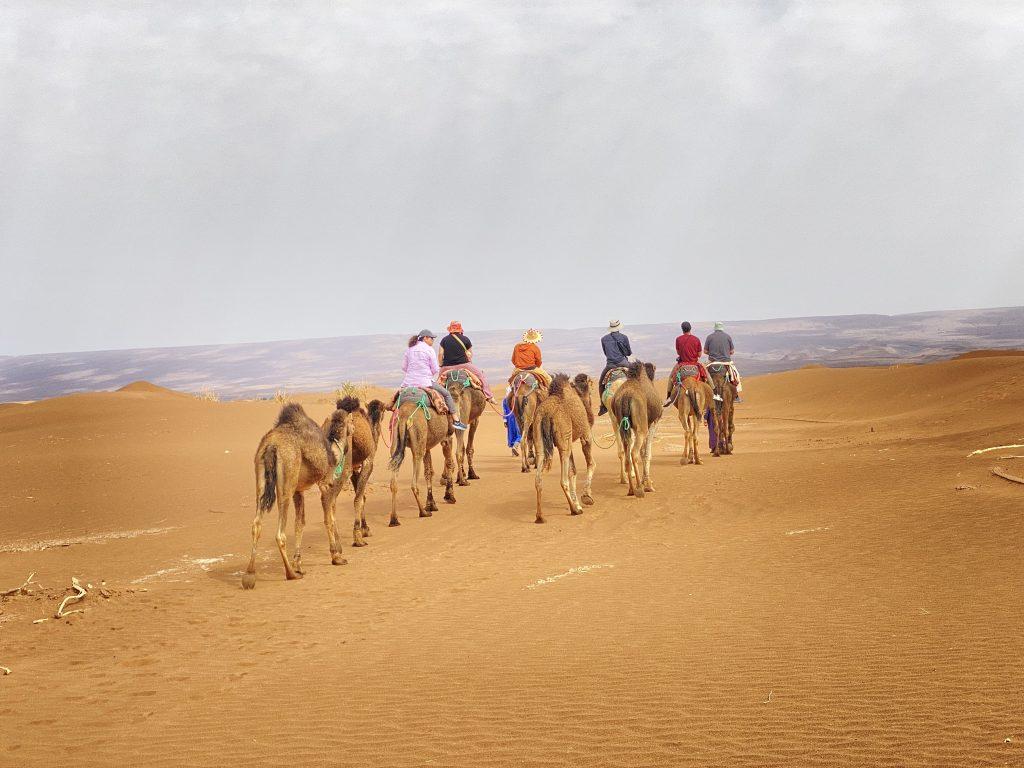
There are certain travel experiences that live up to every expectation, and riding a camel through the Sahara Desert is one of them. The rhythmic sway of the animal, the dunes glowing in warm light, the silence broken only by soft footfalls on sand — it is an experience that photographs cannot fully capture and words struggle to describe.
But if you have never ridden a camel before, the prospect can also feel a little daunting. How do you get on? Will it be uncomfortable? What happens if the camel decides it does not like you? And is the sunset trek or the sunrise trek better?
This guide answers every question a first-time camel trekker might have, so you can approach your Sahara adventure with confidence and excitement instead of anxiety.
Dromedary, Not Camel (Technically)
Before anything else, a quick clarification. The animals you will ride in the Moroccan Sahara are dromedaries, not the two-humped Bactrian camels of Central Asia. Dromedaries have a single hump, longer legs, and are perfectly adapted to the hot, arid conditions of the Sahara.
In everyday English, and throughout Morocco, dromedaries are simply called camels. We will use the common term throughout this article, but if you want to impress your guide, call your ride a dromedary and watch the smile of appreciation.
Dromedaries are remarkable animals. They can go for weeks without water, tolerate extreme heat, and carry loads of up to 200 kilograms across soft sand that would exhaust a horse in minutes. They have thick, calloused pads on their feet that spread wide to prevent sinking, and their double rows of eyelashes and closeable nostrils protect against blowing sand.
They are also, it must be said, animals with personality. Some are placid and docile, others are vocal and opinionated, and a few are downright mischievous. Your guide will match you with a camel suited to your experience level, so trust the process.
Types of Camel Treks Available
Not all camel treks are the same, and choosing the right duration and format is important for enjoying the experience.
Sunset Camel Trek (1-2 Hours)
The most popular option for visitors with limited time or those who want a taste of camel riding without a full overnight commitment. You mount your camel at the edge of the dunes in the late afternoon, ride for about 45 minutes to an hour into the erg, watch the sunset from the top of a dune, and ride back to your starting point.
Best for: Families with small children, travelers with physical limitations, those short on time, and anyone who wants the iconic sunset photo without the overnight camp.
Overnight Camel Trek (Sunset to Sunrise)
This is the classic Sahara experience and the option we recommend for most first-time visitors. You ride into the desert in the afternoon, arriving at a desert camp as the sun sets. The evening includes dinner, music around a campfire, and stargazing. You sleep in a tent or under the stars and ride back at sunrise the next morning.
The ride to camp typically takes 1 to 1.5 hours each way, covering about 5 to 7 kilometers. This is enough to feel genuinely immersed in the desert without causing discomfort for inexperienced riders.
Best for: Anyone who wants the full desert experience. This is the option that most travelers describe as life-changing.
Two-Night Trek
A two-night trek adds a full day in the desert between the sunset arrival and sunrise departure. This extra day allows you to explore on foot, try sandboarding, climb to the highest dune summits, visit nomadic encampments, and simply absorb the silence and scale of the landscape at a relaxed pace.
Best for: Travelers who want a deeper immersion, photographers who need time for different light conditions, and anyone who does not want to feel rushed.
Multi-Day Expedition (3-7 Days)
For the truly adventurous, multi-day camel treks follow traditional caravan routes through the desert. You camp in a different location each night, cover significant distances, and experience the rhythm of desert travel as nomadic peoples have for centuries.
These longer treks require reasonable physical fitness and a willingness to accept basic camping conditions. The rewards are proportional: remote landscapes that few tourists ever see, authentic interactions with nomadic families, and a sense of accomplishment that a short trek cannot match.
Best for: Experienced travelers, adventure seekers, and anyone who has done the overnight trek and wants more.
Browse all of our camel trekking options to find the right trek for your adventure level.
How to Mount and Dismount a Camel
The mounting and dismounting process is the part that makes most first-timers nervous, but it is actually straightforward once you know what to expect.
Mounting
Your camel will be seated on the ground with its legs folded beneath it. This is the position called “couched.” Even seated, the camel is large, and you will need to swing your leg over the saddle much as you would mount a tall horse.
Step-by-step:
- Approach the camel from the left side (your guide will position you).
- Place your left foot in the stirrup or on the camel’s folded knee (your guide will show you which).
- Swing your right leg over the saddle and settle into position.
- Grip the front handle of the saddle firmly with both hands.
- Lean back. This is the crucial part. When the camel stands up, it rises rear-end first, which pitches you forward. If you lean back, you stay balanced. If you lean forward, you will feel like you are about to go over the camel’s head (you will not, but it feels that way).
The camel standing up happens in two stages: first the back legs extend, tilting you forward, then the front legs unfold, leveling you out. The whole process takes about 3 seconds and feels dramatic the first time. By the second time, you will wonder why you were worried.
Dismounting
Dismounting is the reverse process. Your guide will instruct the camel to couch (sit down), and you lean back as the camel folds its front legs first (tilting you forward) and then its back legs.
Once the camel is fully seated, swing your right leg over and step down on the left side. Hold the saddle handle until you are fully off to maintain balance.
Important Tips
- Trust your guide: They have done this thousands of times and will physically help you if needed.
- Do not panic: The camel’s rising and sitting movements are sudden but not dangerous. Staying relaxed makes everything easier.
- Keep your feet out of the way: When the camel couches, make sure your feet and legs are clear of its folding legs.
What the Ride Feels Like
Riding a camel is unlike riding any other animal. The motion is a distinctive side-to-side rolling gait that takes a few minutes to adjust to. Some describe it as similar to being on a gentle boat, with a rhythmic sway that can actually become quite relaxing once you stop fighting it and let your body move with the camel.
The Rhythm
Camels walk at about 5 kilometers per hour, which feels slow until you realize there is no rush. The steady pace is part of the experience. It gives you time to observe the changing patterns in the sand, watch your shadow stretch across the dunes, and feel the desert’s vastness settling into your consciousness.
The Height
Sitting on a camel puts you about 2 to 2.5 meters above the ground, significantly higher than horseback. This elevated vantage point gives you panoramic views over the dunes and creates a wonderful sense of scale.
The Sound
One of the surprising pleasures of camel trekking is the sound: the soft padding of camel feet on sand, the occasional grumble or snort from your mount, the creak of the saddle, and beneath it all, the deep silence of the desert. No engines, no horns, no notifications. Just you, the camel, and the sand.
Comfort Tips for First-Time Riders
Let us be honest: camel riding can be uncomfortable if you are unprepared. The saddle is hard, the motion is unfamiliar, and your inner thighs, lower back, and sitting bones will notice the effort. But with a few simple preparations, you can minimize discomfort and maximize enjoyment.
What to Wear
- Long trousers: Essential for protecting your legs from saddle friction. Loose cotton or linen trousers are ideal. Avoid shorts, which will leave your inner thighs in contact with the rough saddle or blanket.
- Comfortable underwear: This matters more than you might think. Seamless, moisture-wicking underwear reduces chafing. Some experienced trekkers wear cycling shorts underneath their trousers.
- Closed-toe shoes or sturdy sandals: You will need to use stirrups, and the sand can be very hot. Flip-flops are not suitable.
- A scarf or cheche: Protects your head, face, and neck from sun and blowing sand. Your guide will typically provide one and show you how to wrap it.
- Layers: Bring a warm layer for sunset and early morning, even if the daytime temperature is warm.
Physical Preparation
- Core strength helps: The constant balancing motion of camel riding engages your core muscles. If you have a few weeks before your trip, simple core exercises (planks, crunches, yoga) will make the ride more comfortable.
- Stretch beforehand: A few minutes of hip and lower back stretching before mounting will reduce stiffness afterward.
- Stretch afterward: Your muscles will appreciate some gentle stretching at camp, especially your hip flexors, hamstrings, and lower back.
During the Ride
- Relax your body: Tensing up amplifies every bump and sway. Let your hips move with the camel’s rhythm, keep your shoulders loose, and breathe naturally.
- Shift your weight: Do not stay in exactly the same position for the entire ride. Shift your weight periodically, lean forward, lean back, and give your sitting bones a break.
- Use the handle: The front of the saddle has a handle or pommel. Use it for stability, especially on inclines and declines.
- Communicate with your guide: If you are uncomfortable, need a break, or want to walk for a stretch, just say so. There is no shame in walking part of the way, and your guide will be happy to accommodate.
After the Ride
It is normal to feel slightly sore after your first camel ride, especially in the inner thighs and lower back. This is similar to the soreness you might feel after horseback riding or cycling for the first time. It fades within a day or two and is a small price for an extraordinary experience.
Sunset Trek vs. Sunrise Trek: Which Is Better?
This is one of the most common questions we receive, and the answer depends on your preferences.
The Sunset Trek
The experience: You ride into the dunes in the warm afternoon light, watching the shadows lengthen and the colors deepen. As you reach your viewpoint or camp, the sun drops toward the horizon, painting the sand in shades of gold, copper, and eventually deep rose. The transition from day to night in the desert is gradual and spectacular.
Pros: Warmer temperatures, softer light for photography, the excitement of riding into the unknown, watching the first stars appear after sunset.
Cons: You are riding away from camp or base, so if you are tired, the walk or ride back may feel long (for short treks). For overnight treks, there is no downside.
The Sunrise Trek
The experience: You rise in the pre-dawn darkness, mount your camel under a sky full of stars, and ride as the eastern horizon begins to glow. Watching the sun rise over the dunes from camelback is one of the most serene experiences in travel. The early morning light creates long shadows and reveals the intricate ripple patterns in the sand.
Pros: Cooler temperatures, fewer people, the magical transition from starlight to daylight, incredible photography light, the sense of being up before the world.
Cons: Requires an early wake-up (typically around 5:30-6:00 AM depending on season), cold temperatures in winter months.
Our Recommendation
If you are doing an overnight trek, you get both. You ride in at sunset and ride out at sunrise, which is the ideal combination. If you are choosing a short trek with only one direction, the sunset trek is slightly more popular and arguably more dramatic, but the sunrise offers a quieter, more meditative experience.
Camel Welfare: What You Should Know
Responsible travelers rightly ask about the welfare of the camels used for trekking. Here is what to look for and what to expect from a reputable operator.
Signs of Well-Cared-For Camels
- Healthy body condition: The camel should look well-fed, with a firm (not sagging) hump. The hump stores fat, and a drooping or deflated hump can indicate poor nutrition.
- Clean, undamaged saddle area: The blankets and saddle should not be causing sores or rubbing. Check for bare patches or wounds on the back and flanks.
- Calm demeanor: While camels are naturally vocal (groaning and grumbling are normal), a camel that is panicked, excessively reluctant, or showing signs of distress may be overtired or mistreated.
- Adequate rest: Camels should not be working continuously. Reputable operators rotate their animals and give them rest days.
- Access to food and water: After the trek, camels should be watered and allowed to graze or eat supplementary feed.
What Duna Daurada Does
Our camels are owned and cared for by local Berber families who have raised these animals for generations. The relationship between a Saharan Berber and their camel is one of genuine partnership and respect. Our camels work limited hours, receive veterinary care, and are well-fed and watered. We believe that ethical treatment of our animals is not just a moral obligation but essential for providing a quality experience — a happy, healthy camel makes for a smoother, more enjoyable ride.
What Happens at the Desert Camp
For overnight treks, the camp is where the magic deepens.
Arrival
You arrive at camp as the sun is setting. Your guide helps you dismount, the camels are unsaddled and led away to rest and eat, and you are shown to your tent or sleeping area. There is time to explore the surrounding dunes, climb to a high point for sunset views, and take photographs in the extraordinary light.
Dinner
Dinner is typically a traditional Moroccan meal prepared by your camp staff: a starter of soup or salad, a main course tagine or couscous, and fruit for dessert. Meals are served in a communal dining tent, and the food is often surprisingly good given the remote setting. Vegetarian and other dietary requirements can be accommodated with advance notice.
Evening Entertainment
After dinner, your guides and camp staff gather around a fire pit (campfire conditions permitting) for music and conversation. Drums come out, songs are sung, and guests are invited to join in. This fireside session under a sky blazing with stars is, for many travelers, the single most memorable moment of their entire Morocco trip.
Sleeping
Depending on your camp level, you will sleep in a shared Berber tent, a private tent with a real bed, or a luxury suite with full amenities. Regardless of the accommodation level, sleeping bags or warm blankets are provided for cold nights. Many travelers choose to drag their mattress or blanket outside and sleep under the stars, which is an unforgettable option on clear, mild nights.
Sunrise
You will be woken early (around 5:30 to 6:00 AM) to watch the sunrise. Some guests climb the nearest high dune, while others watch from camp with a cup of coffee. The sunrise over Erg Chebbi is spectacular, and the post-dawn light creates ideal conditions for photography.
After breakfast, you remount your camel for the ride back to the edge of the dunes, arriving in time to continue your onward journey.
Frequently Asked Questions
Is camel riding safe?
Yes, when done with a reputable operator and experienced guides. Camels used for tourism are trained and accustomed to carrying passengers. Serious accidents are extremely rare.
Can children ride camels?
Yes. Most operators allow children from about age 4 or 5 to ride, usually sharing a camel with an adult or a guide. Younger children may ride in a carrier or share a saddle with a parent.
I have back problems. Can I still ride?
This depends on the severity of your condition. The camel’s swaying motion puts some stress on the lower back. If you have chronic back issues, a short sunset trek (1 hour or less) may be manageable, but a multi-hour trek could be uncomfortable. Discuss your situation with our team when booking, and we can suggest alternatives such as 4×4 access to the camp with a short camel ride for photos.
What if I am afraid of heights or animals?
The height is noticeable but not extreme (about 2 meters), and most people adjust quickly. If you are nervous around large animals, spending a few minutes with the camel before mounting — touching its neck, talking to it — can help ease anxiety. Your guide will be right beside you throughout.
Do I need travel insurance?
We strongly recommend travel insurance for any Morocco trip, including coverage for adventure activities. Check that your policy covers camel trekking specifically, as some standard policies exclude animal riding.
How do I book?
Browse our desert tours for itineraries that include camel trekking, or use the tour finder to filter by activity type. If you want a custom experience — perhaps a private overnight trek or a multi-day expedition — contact us to build a personalized itinerary.
Final Thoughts
Your first camel ride through the Sahara will be clumsy, unfamiliar, and probably a little uncomfortable. It will also be breathtaking, humbling, and quietly transformative. There is something about moving through an ancient landscape on the back of an animal that has carried travelers across these sands for centuries that strips away the noise of modern life and leaves you with something clearer and more essential.
Do not overthink it. Do not worry too much about the perfect photo or the ideal seating position. Just get on the camel, let your body find the rhythm, and look out at the dunes stretching endlessly before you. The Sahara will do the rest.